

 Demos
Demos





























How is AI improving hospital capacity forecasting?
Hospital systems face constant pressure to balance patient demand with finite resources. AI-driven capacity forecasting provides hospitals with the predictive intelligence needed to allocate beds, manage surges, and schedule staff efficiently. By analyzing historical admissions, seasonal patterns, and real-time data, AI systems can deliver actionable forecasts that reduce overcrowding and improve patient flow.
This proactive approach allows healthcare leaders to shift from reactive management to resource planning, improving both patient outcomes and operational resilience.
What AI methods are used in hospital forecasting?
- Time-series modeling: Predicts admission rates and discharge volumes.
- Machine learning regression models: Estimates bed occupancy, emergency demand, and staffing needs.
- Simulation algorithms: Model patient flow scenarios to test operational strategies.
- Reinforcement learning: Optimizes scheduling and resource allocation dynamically.

When combined with real-time data from EHRs, AI models generate accurate, continuously updated capacity forecasts.
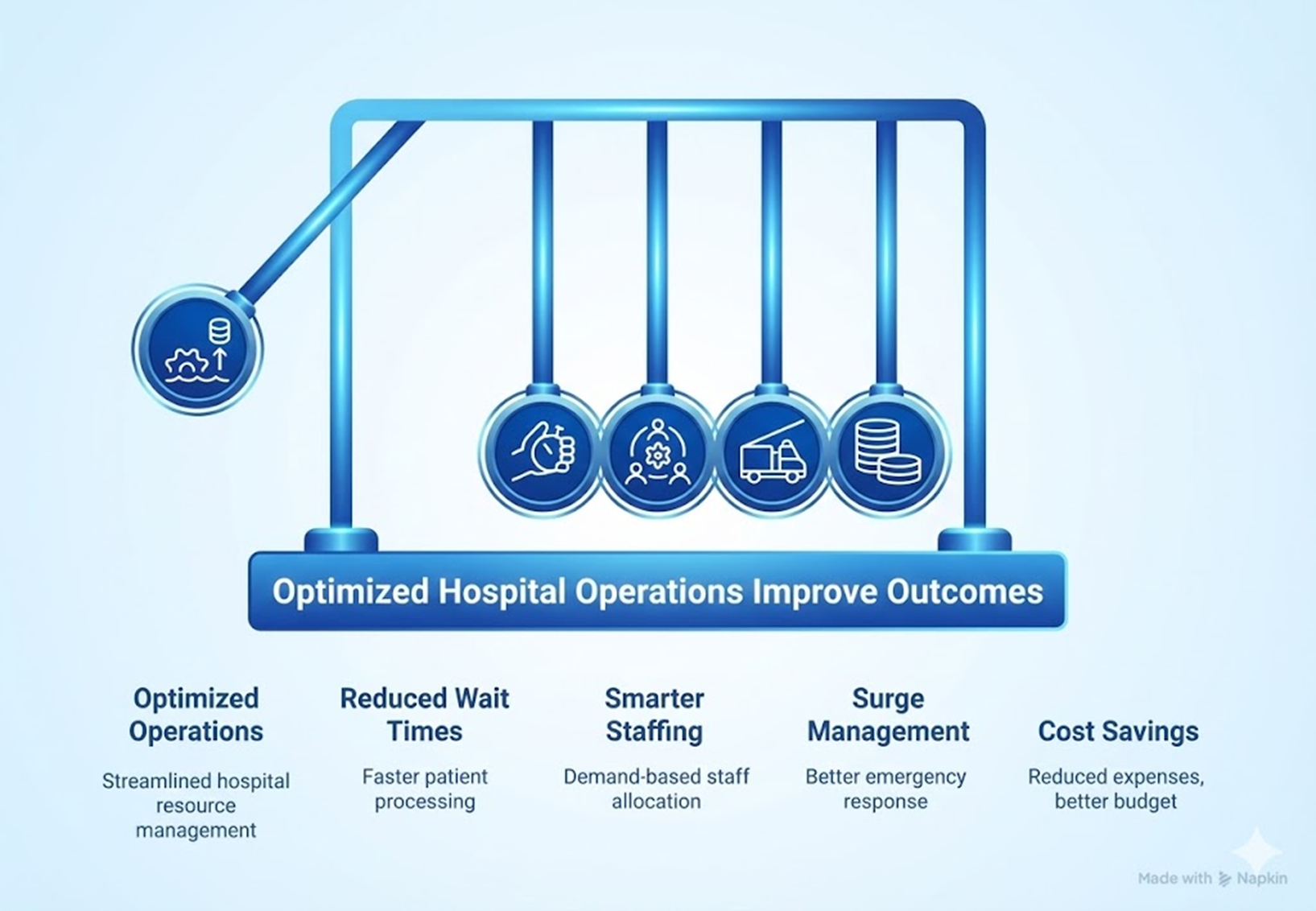
What operational benefits does AI deliver?
- Reduced wait times through optimized bed turnover.
- Smarter staffing based on predicted demand patterns.
- Better emergency surge management during epidemics or natural disasters.
- Cost savings from reduced overtime and delayed discharges.
For example, AI-powered dashboards can alert administrators to projected ICU saturation days in advance, allowing timely resource adjustments.
How does John Snow Labs contribute?
John Snow Labs’ Healthcare NLP pipelines help to integrate clinical and operational data from EHRs into forecasting systems, enabling contextual understanding of admission causes, comorbidities, and discharge barriers. These insights strengthen predictive models for capacity planning and quality improvement.
What are the challenges and future directions?
Data fragmentation and lack of interoperability remain the main barriers. Future systems will leverage federated learning for cross-hospital collaboration while maintaining data privacy. Combination of machine learning forecasting with discrete event modeling systems can simulate future scenarios, supporting strategic planning across health networks.
FAQs
What data does AI use for forecasting?
Admission logs, discharge summaries processed by Healthcare NLP information extraction pipelines, staffing rosters, and seasonal trend data feed predictive models.
Can AI predict pandemics?
AI can forecast surge impacts once initial trend data is available but cannot predict novel outbreaks alone.