

 Demos
Demos































Generative AI in healthcare is a transformative technology that utilizes advanced algorithms to synthesize and analyze medical data, facilitating personalized and efficient patient care. This article provides a high-level view of how GenAI improves clinical workflows, patient experience, and operational efficiency.
Generative AI in Medicine Market Outlook
The rapid adoption of GenAI in healthcare is reflected in the projected growth of the global generative AI in medicine market. According to Precedence Research, the market is expected to increase from $1.55 billion in 2025 to approximately $45.82 billion by 2034, highlighting a compound annual growth rate of roughly 45–46% over the forecast period. In the intermediate years, the market is projected to reach $2.26 billion in 2026, $3.29 billion in 2027, $4.79 billion in 2028, $6.98 billion in 2029, and $10.17 billion by 2030, before accelerating to $14.82 billion in 2031, $21.59 billion in 2032, and $31.45 billion in 2033.
This trajectory underscores how quickly healthcare providers, life sciences organizations, and payers are moving from pilot projects to scaled production deployments of GenAI solutions – from clinical documentation and decision support to drug discovery, imaging, and patient-facing digital experiences.
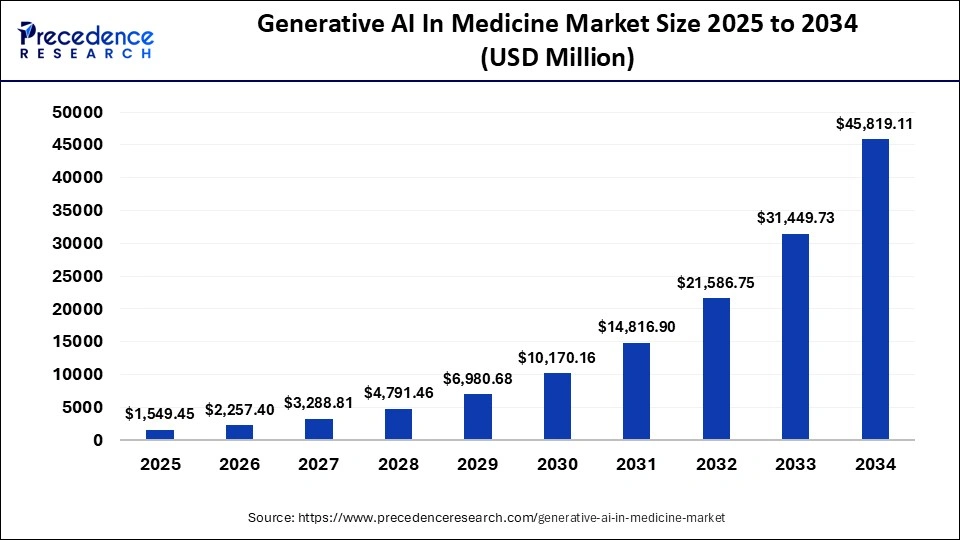
Source: Precedence Research, “Generative AI in Medicine Market”
How Generative AI Enhances Healthcare Workflows
Generative AI has shown its effectiveness in various areas of practice in the healthcare sector by automating what used to be a time-consuming process. According to McKinsey, GenAI can summarize large amounts of data from patient histories, freeing up healthcare professionals to focus on more complex patient needs. Gen AI could revolutionize prior authorization and claims processing of health insurance, converting unstructured data into structured formats and enabling near-real-time benefits verification.
Core Capabilities and Patient-Facing Functions
Gen AI could change the way prior authorization and claims processing for health insurance are done, structure unstructured data, and provide real-time benefits verification. Generative AI helps create better health assistants and specific health plans. The main functions of Generative AI in the healthcare setting are to respond to the patient’s queries, schedule doctors appointments, monitor symptoms of various diseases, and help the patient adhere to the medication schedule. This real-time support increases the interaction and leads to better results. These capabilities make GenAI one of the most practical tools for improving patient engagement.
Support for Clinicians and Medical Training
The third one is specialized care for practicing physicians and interns. The technology is also useful in planning and simulation, as it provides surgeons with 3D models to practice and plan before using them in the real world. This strengthens both clinical confidence and procedural accuracy.
Challenges and Considerations
The use of AI in healthcare is not without its challenges. Ethical issues, data security risks, and the need for guidelines are some of the issues that have been raised. When handling health information, it is important to ensure that the results given by AI are accurate, reliable, and fair.
Future Outlook
There are still opportunities for AI in healthcare. The improvements are still ongoing and influence the provision of patient care, the conduct of research, and the healthcare sector in general. Thus, with the further development of AI technologies, new opportunities will be opened, which will change the possibilities in the field of medicine and healthcare. As GenAI matures, its impact will continue to expand across clinical, operational, and research domains.
What are the Trends of Generative AI in Healthcare in 2026
Generative AI in healthcare in 2025 is set to redefine patient care, medical research, and operational efficiencies. Compared to 2025, when early adoption focused on pilot projects and regulatory discussions, 2026 will witness widespread implementation, more robust compliance frameworks, and advanced integration with multimodal AI models.
Key Generative AI Trends in Healthcare in 2025:
- Greater Adoption of Multimodal AI Models
In 2025, most healthcare generative AI applications relied on single-modality models, primarily text-based large language models (LLMs). Generative AI trends 2026 indicate a shift toward multimodal models capable of analyzing and generating text, images, genomics data, and even real-time patient vitals simultaneously. This advancement will improve diagnostics, clinical decision support, and medical imaging analysis. - Enhanced Regulation and Ethical AI Governance
While 2025 saw the introduction of AI regulations, 2026 will focus on refining these frameworks to ensure transparency, bias mitigation, and data security. Generative AI in 2026 will require compliance with stricter policies, especially in clinical trials and drug development, where synthetic data generation will play a pivotal role. - Expansion of Generative AI for Synthetic Data Generation in Healthcare
As concerns about patient privacy, generative AI for synthetic data generation in healthcare will become a critical tool for research and AI model training. This approach will allow researchers to create realistic yet anonymous datasets, accelerating the development of new treatments without compromising patient confidentiality. - Personalized and AI-Powered Drug Discovery
In 2025, AI-assisted drug discovery showed promise, but generative AI medicine in 2026 will take it a step further by designing novel drug compounds in real time. AI-driven protein structure predictions and molecule generation will shorten the drug development lifecycle and improve treatment outcomes for complex diseases. - AI-Augmented Precision Medicine & Diagnostics
The next phase of gen AI use cases in healthcare will be its ability to tailor treatment plans with unprecedented accuracy. AI models will analyze genetic, lifestyle, and environmental factors to provide hyper-personalized treatment recommendations, making precision medicine more effective than ever.
The evolution of generative AI in healthcare in 2026 will bring major breakthroughs in personalized medicine, synthetic data generation, and AI-driven diagnostics. Compared to 2025, when many innovations were in experimental phases, 2025 will mark the transition to full-scale adoption, with stricter regulations ensuring ethical AI deployment. As healthcare generative AI continues to evolve, its potential to revolutionize patient care, drug development, and medical research will be greater than ever.
What are the Key Generative AI Use Cases in Healthcare
Generative AI is becoming increasingly applied in the healthcare sector and exhibits a high level of competency in processing medical information. A talk on this subject, presented by John Snow Labs, demonstrates practical applications and lessons learned from applying Generative AI models in healthcare settings.
The talk emphasizes how Generative AI has achieved remarkable feats such as passing the US medical licensing exam and effectively summarizing clinical notes, demonstrating its advanced understanding of complex medical concepts and terminology. It also addresses the various challenges that come with these AI models. Issues such as robustness levels, privacy concerns, model biases, and “hallucinations” (the generation of incorrect or inappropriate information by Artificial Intelligence) are serious barriers to safe and effective implementation in healthcare. An example of such healthcare-specific innovation is Medical VLM-24B, a vision-language model developed by John Snow Labs that combines medical imaging analysis with clinical text understanding, enabling clinicians to interpret X-rays, MRIs, and pathology slides alongside patient records for faster, more accurate diagnoses.
John Snow Labs shares insights from deployed software, highlighting what has been learned through real-world applications and providing best practices for the healthcare AI community. The session discusses the use cases for Generative AI currently being deployed, the architecture used to deliver these solutions, and benchmarks that are being developed to evaluate and decide between general-purpose and healthcare-specific GPT (Generative Pre-trained Transformer) models.
These findings are beneficial for firms planning to implement Generative AI in their healthcare services as they offer a real-world view of the opportunities and risks of these technologies. By leveraging the experiences of John Snow Labs and others in the field, healthcare providers can navigate the complexities of Generative AI with greater confidence and ethical consideration.
For a detailed overview of the talk and more insights into the practical applications of Generative AI in healthcare, you can watch the full session “Lessons Learned Applying Generative AI Models in Healthcare“.
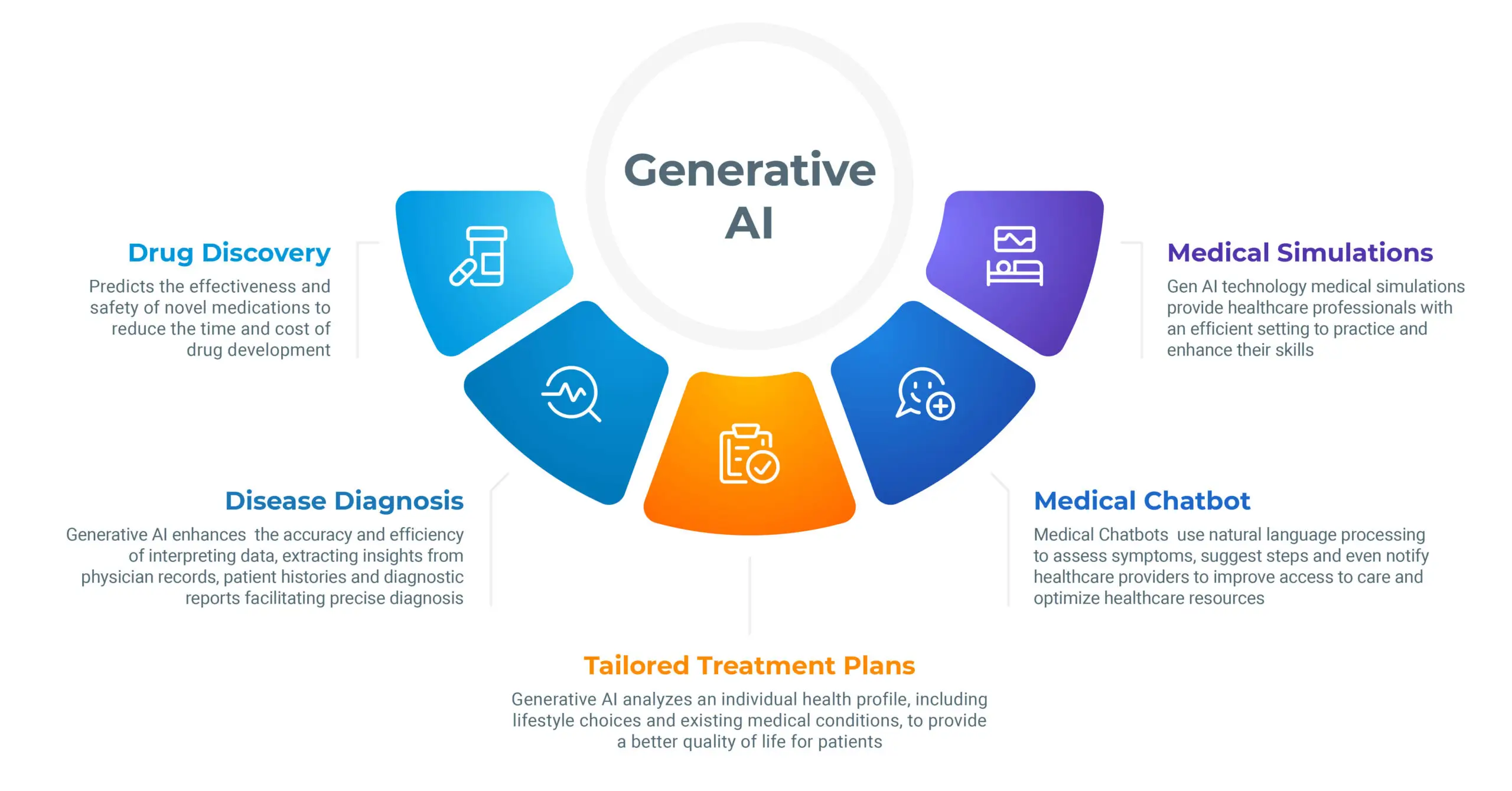
The emergence of Gen AI technology in healthcare has created opportunities to improve patient outcomes, streamline operations, and drive innovation throughout the healthcare system. The practice shows that Generative AI in medicine is applicable at all stages, from drug discovery to creating treatment plans.
Drug Discovery
In drug discovery, Gen AI accelerates compound identification by simulating their interactions with biological targets. These AI systems use learning algorithms to assess the safety and efficacy of new drugs, potentially reducing the time and costs of the conventional drug development process. This speeds up the delivery of treatments and helps investigate treatments for diseases that were previously unamenable due to their rarity or complexity.
Disease Diagnosis
Generative AI enhances disease diagnosis by enhancing the accuracy and efficiency of interpreting data. Healthcare NLP (Natural Language Processing) technologies extract insights from physician records, patient histories and diagnostic reports facilitating precise diagnosis. For conditions like cancer, diabetes and heart diseases early detection can be life-saving.
How to Use Generative AI In Medical Chatbots
Medical chatbots powered by Gen AI are revolutionizing engagement and support.
Virtual assistants are available around the clock to provide communication services offering advice answering questions and guiding patients through their healthcare journey. These chatbots use natural language processing to assess symptoms, suggest steps and even notify healthcare providers in some cases. This improves access to care and optimizes healthcare resources.
When it comes to patient care, Generative AI technologies personalize healthcare delivery by tailoring treatments and monitoring plans according to patient needs. These AI systems analyze amounts of data including genomics, lifestyle factors and ongoing health information to create customized care plans. Applying AI in the treatment process also improves the quality of patient service. It enhances patient compliance with treatment regimens and reduces medical errors.
Virtual assistants and robot therapists enhance accessibility and convenience for patients and healthcare professionals. Studies show that patients are more willing to engage with robotic therapists, especially for sensitive issues such as substance abuse or mental health concerns. The imaging field is also evolving with the help of AI technology, which can produce high-quality synthetic images for training and diagnosis. This technology creates realistic images with partial or incomplete information. It helps identify diseases that are difficult to detect through imaging procedures. In addition, Generative AI can protect patients’ privacy by blurring out identifiable information, enabling medical images sharing for educational and research purposes.
Tailored Treatment Plans
By analyzing an individual’s health profile, including data like lifestyle choices and existing medical conditions generative AI creates customized treatment plans. This personalized approach ensures that treatments are more effective with side effects resulting in health outcomes and a better quality of life for patients.
What are the applications of Medical Simulations with GenAI
Gen AI-based medical simulations are an effective way to improve and develop healthcare professionals’ skills. These simulations can mimic procedures or low-frequency clinical scenarios, which are very useful in gaining practical experience without putting real patients at risk. This leads to better patient care and faster learning for the medical professionals.
As Generative AI continues to advance and integrate into healthcare, it has the potential to further revolutionize the industry. Hospitals, physician groups and health insurance companies are increasingly recognizing how GenAI can boost efficiency enhance outcomes and reduce healthcare costs.
How Enterprises Can Deploy Generative AI in Healthcare
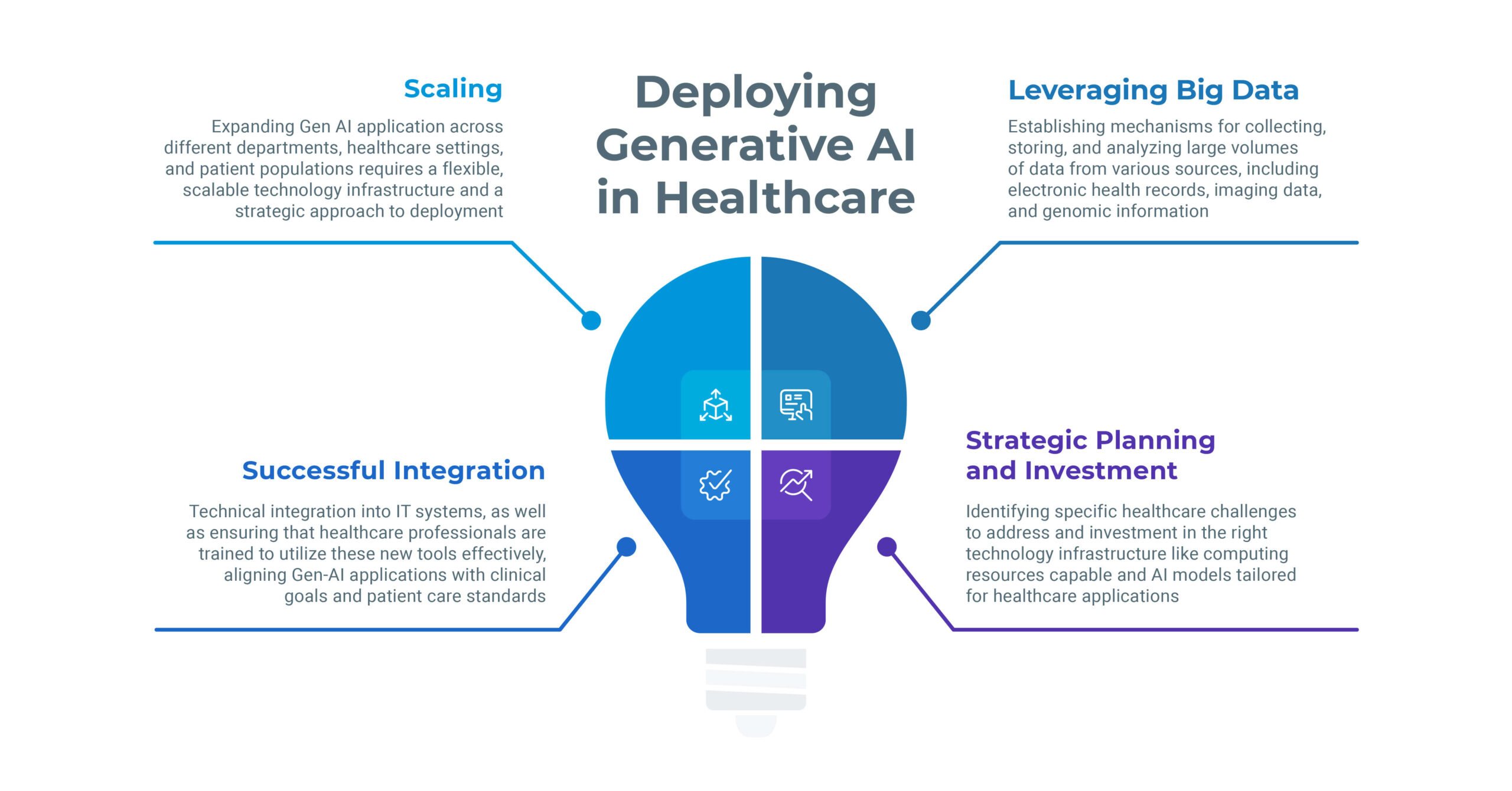
The deployment of Generative AI for Healthcare by enterprises involves strategic planning, investment in technology, focus on successful integration and scaling:
- Strategic Planning and Investment: Enterprises must begin with a clear strategic plan that outlines the objectives for incorporating Gen-AI into their operations. This includes identifying specific healthcare challenges to address, such as improving diagnosis accuracy, personalizing patient care, or streamlining drug discovery. Investment in the right technology infrastructure is crucial, including computing resources capable of processing big data, and securing access to AI models and tools that are tailored for healthcare applications.
- Successful Integration: For Gen AI to effectively enhance healthcare services, it must be seamlessly integrated into existing healthcare systems and workflows. This involves technical integration into IT systems and ensuring that healthcare professionals are trained to utilize these new tools effectively. Successful integration also means aligning Gen-AI applications with clinical goals and patient care standards to ensure they add value without disrupting care delivery.
- Leveraging Big Data: The power of Gen AI in healthcare largely stems from its ability to analyze and generate insights from big data. Enterprises must establish mechanisms to collect, store, and analyze large volumes of data from various sources, including electronic health records, imaging data, and genomic information. Ensuring the quality and accessibility of this data is essential for Gen AI models to learn effectively and provide accurate, actionable outputs.
- Scaling: Scaling Gen AI solutions involves expanding their application across different departments, healthcare settings, and patient populations. This requires a flexible, scalable technology infrastructure and a strategic approach to deployment that can adapt to varying needs and operational scales. Scaling successfully also means continuously monitoring performance, making iterative improvements, and staying responsive to feedback from healthcare professionals and patients.
-
-
-

What are the Real Applications of Generative AI in Healthcare
As generative AI in healthcare evolves, its real-world impact is becoming increasingly evident. From personalized treatment recommendations to advanced clinical decision support, healthcare organizations are leveraging AI to enhance patient outcomes and streamline workflows.
Generative AI in healthcare is advancing various practical applications. One prominent use case is the implementation of Retrieval-Augmented Generation (RAG) on FHIR (Fast Healthcare Interoperability Resources), which enables healthcare systems to make data more accessible by pairing RAG with FHIR. This approach, developed using John Snow Labs’ language models, allows real-time retrieval of data based on specific questions, rather than relying on pre-trained models, making healthcare data more transparent and easily interpretable.
Another compelling use case of Gen AI in healthcare is in precision population health management. Generative AI models allow healthcare providers to segment high-risk patient groups using free-text prompts. This use of Gen AI for cohort formation and retrieval improves the accuracy of patient treatment strategies. For instance, healthcare teams can identify patients at high risk of unplanned admissions based on medical conditions like chronic kidney disease. This application of Generative AI helps healthcare providers implement tailored interventions and improve patient outcomes by offering more precise data-driven insights.
Use cases such as healthcare-specific Large Language Models (LLMs) have proven beneficial in data discovery from clinical notes. In collaboration with the U.S. Department of Veterans Affairs (VA), John Snow Labs has demonstrated how pre-processing clinical texts before applying LLMs can significantly enhance the accuracy of generative AI outputs. This advancement helps healthcare providers derive valuable insights from complex clinical data, improving care for veterans.
John Snow Labs also shares valuable lessons from deploying large language models in healthcare, emphasizing the importance of tailoring generative models to meet healthcare-specific needs. Their insights into use cases and solution architectures demonstrate how organizations can optimize the performance of general-purpose versus healthcare-specific AI models, further proving the transformative impact of Generative AI in healthcare.
According to the Boston Consulting Group (BCG), applications of Generative AI in healthcare have immense potential across various sectors, including providers, pharmaceutical companies, and public health agencies. BCG highlights the ability of Gen AI in healthcare to enhance efficiency and care quality. They also stress the importance of addressing challenges such as data privacy and bias. BCG advises healthcare organizations to adopt comprehensive strategies and invest in data infrastructure to capitalize on the benefits of Generative AI fully.
-
-
The Brookings Institution also underscores the range of Generative AI in healthcare, including routine data collection, diagnosis, and treatment planning. They emphasize the need for transparency, ethical standards, and data governance frameworks to ensure that the benefits of Generative AI in healthcare are distributed equitably across patient populations and healthcare providers. Brookings advocates stronger protections for informed consent and the use of health data to avoid monopolies and ensure fair access to AI-driven healthcare advancements.
By integrating insights from John Snow Labs and aligning with BCG and Brookings’ recommendations, healthcare providers can better navigate the challenges of deploying genAI in healthcare. These real-world use cases demonstrate the vast potential of Generative AI to revolutionize patient care, data management, and operational efficiency on a global scale.
FunctionalMind: AI-Powered Clinical Agents for Evidence-Based Care
One of the most promising gen AI use cases in healthcare is FunctionalMind, a cutting-edge AI system designed to assist clinicians in applying the latest evidence-based medicine. Developed by John Snow Labs, FunctionalMind utilizes Generative AI in healthcare to analyze vast medical knowledge bases, summarize the latest clinical research, and provide actionable insights for patient care.
Traditional methods of staying updated with medical advancements require clinicians to sift through thousands of research papers and evolving guidelines. FunctionalMind changes this by leveraging AI models trained on medical data that rapidly extract, summarize, and apply relevant findings. This not only enhances diagnostic accuracy but also enables precision medicine by tailoring treatment plans to each patient’s unique condition.
AI-Driven Enhancements in Functional and Integrative Medicine
The integration of generative AI in healthcare is also transforming functional and integrative medicine by bridging the gap between conventional treatments and holistic approaches. AI-powered models analyze patient history, genetic data, and lifestyle factors to provide comprehensive treatment recommendations that combine traditional medicine with integrative therapies.
In 2025, early implementations focused on AI-driven symptom tracking and supplement recommendations. By 2026, AI-enhanced functional medicine will take a more sophisticated approach, offering real-time clinical decision support that integrates dietary, mental health, and physiological data. This ensures that treatments are not only evidence-based but also personalized for maximum effectiveness.
With solutions like FunctionalMind and advancements in AI-driven precision medicine, generative AI in healthcare is proving to be actively reshape patient care. Whether through AI-powered clinical agents or personalized functional medicine, these advancements highlight the growing impact of AI in making healthcare more effective, data-driven, and patient-centric.
What are the key Benefits of Generative AI in Healthcare
Generative AI, a subset of artificial intelligence that focuses on generating new data similar to the data it is trained on, is revolutionizing medicine and healthcare. By leveraging vast amounts of data to create predictions, simulations, and insights, Gen AI is enhancing disease diagnosis, treatment personalization, drug discovery, patient care, and medical research. This technology’s ability to learn from complex datasets and produce novel, actionable intelligence is unlocking unprecedented efficiencies and capabilities in healthcare.
Enhancing Disease Diagnosis
The most crucial application of Gen AI in healthcare is enhancing disease diagnosis. Due to human error, conventional diagnostic methods can be slow and inaccurate. Generative models, especially deep learning models, have achieved high accuracy in disease diagnosis from medical images. For instance, AI algorithms have outperformed human radiologists in detecting breast cancer from mammograms, as found in a study published in Nature (McKinney et al., 2020). These AI-based diagnostic tools can quickly scan through thousands of images and reveal details that are not easily visible to the human eye, providing the clinician with accurate diagnostic information.
Accelerating Drug Discovery
Drug discovery is a notoriously lengthy and costly process, often taking over a decade and billions of dollars to bring a new drug to market. Gen AI is streamlining this process by predicting how different chemical compounds will behave and how likely they are to make an effective drug. AI algorithms can simulate drug interactions with biological targets at scale and speed impossible for human researchers, significantly reducing the time and cost of drug development. For example, Atomwise uses AI to predict molecular behavior, accelerating the identification of potential drug candidates for diseases like Ebola and multiple sclerosis.
Personalizing Patient Care
GenAI enables the personalization of patient care by analyzing individual health data to tailor treatments. Personalized medicine, grounded in understanding how individual genetic, environmental, and lifestyle factors influence health, can significantly improve treatment outcomes. AI models can sift through vast datasets, including genomic data, to identify the most effective treatment plans for individual patients. This approach not only enhances the efficacy of treatments but also minimizes the risk of adverse reactions, leading to better patient outcomes and satisfaction.
Transforming Medical Imaging
Medical imaging, an essential part of diagnosis and treatment planning, has been changed by Gen AI. AI algorithms enhance the signal-to-noise ratio of the imaging data sets, perform image reconstruction to improve spatial resolution for low-quality inputs, and develop algorithms to detect abnormalities. This enhances diagnostic precision and reduces workload on radiologists, allowing them to devote more time to challenging cases. Generative models can generate fake medical images for training, helping address the problems of data scarcity and privacy.
Revolutionizing Medical Research
GenAI is an excellent asset in medical research. It entails generating synthetic data that resembles accurate patient data. This capability is valuable for pediatric research fields in which data is limited or hard to collect, such as rare diseases. Synthetic data can be used to mimic clinical trials, test theories, and model disease evolution without the moral and security risks of using real patient data. This accelerates research, decreases costs, and helps develop new treatments and therapies.
Improving Healthcare Operations
Beyond direct patient care, Gen AI is improving healthcare operations including resource management and patient flow. For instance, AI algorithms can forecast patient flow rates, which can assist hospitals in scheduling personnel and other strategic planning to increase effectiveness and decrease patient wait times. Furthermore, Gen AI can use pattern recognition in healthcare delivery to pinpoint bottlenecks and recommend ways to improve them, resulting in better health outcomes and lower operational costs.
Overcoming Data Limitations
In healthcare, data lack and quality are important issues affecting research and development. Gen AI achieves this by producing high-quality synthetic datasets that complement the actual data and address the problems of scarcity and privacy. This increases the possibilities of research and improves the training of AI systems to produce better and more accurate healthcare solutions.
Generative AI’s advantages in medicine and healthcare are extensive and apply to nearly every aspect of the field, from disease diagnosis and drug discovery to patient care, medical imaging and research to operational efficiencies. Through the application of GenAI, data can be used in new and exciting ways to increase the accuracy of diagnoses and individualized treatments and find solutions to the most daunting healthcare challenges. Gen AI will likely continue to revolutionize healthcare as the technology advances and becomes more incorporated into healthcare systems, resulting in better, faster, and more personalized healthcare.
The application of GenAI in the healthcare sector is likely to accelerate the development of new technologies and practices that are precise, timely, and tailored to individual patients’ needs. As technology continues to develop and be integrated, the following advantages are likely to be realized to a greater extent: the quality of patient care and the performance of healthcare systems worldwide.
What are the key Challenges in Deploying Generative AI in Healthcare
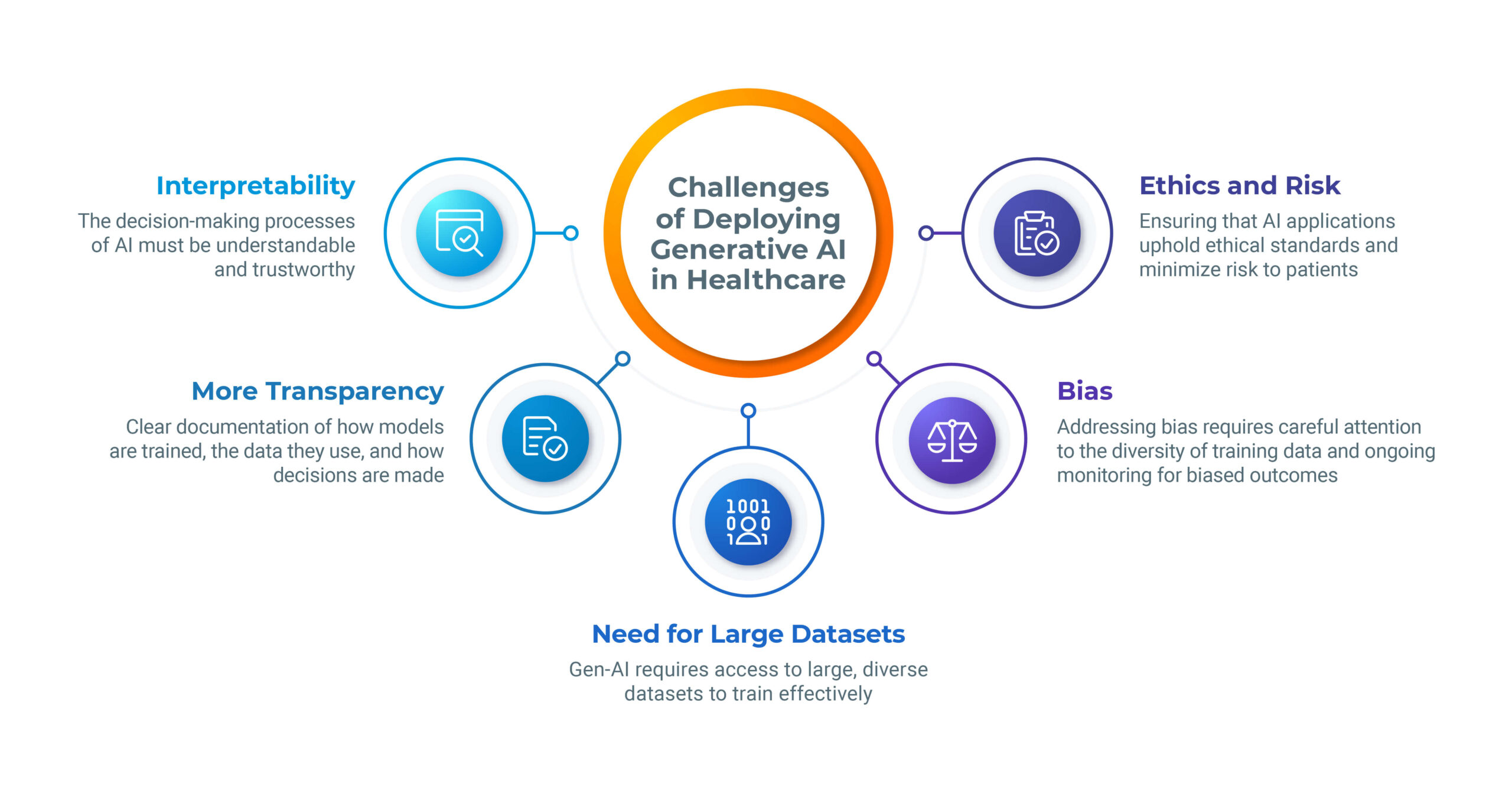
Deploying Generative AI in healthcare is not without its challenges, including interpretability, data requirements, transparency, ethics, risk, and bias.
Interpretability and Transparency
Challenge: Generative AI models, especially deep learning algorithms, are often criticized for their “black box” nature, making it difficult for healthcare professionals to understand how decisions are made. This lack of interpretability and transparency can hinder trust and adoption.
John Snow Labs Solution: John Snow Labs addresses this by offering AI solutions that prioritize explainability. Our platforms are designed to provide clear, understandable insights into how AI models reach their conclusions, thereby enhancing trust among clinicians and patients alike.
Data Privacy and Security
Challenge: The need for large datasets in training AI models raises significant concerns about data privacy and security. Healthcare data is sensitive, and its handling must comply with strict regulations like HIPAA in the United States.
John Snow Labs Solution: John Snow Labs ensures that data platforms and AI models are built with privacy-by-design principles, offering robust encryption and anonymization techniques. We facilitate secure data handling and compliance with healthcare data regulations, making it easier for enterprises to manage risk.
Bias and Fairness
Challenge: They can learn and incorporate biases from their training data and resulting in unfair or biased decisions in patient care.
John Snow Labs Solution: John Snow Labs also equips healthcare organizations to build diverse and comprehensive datasets, along with bias detection and mitigation tools, to train fair and equitable AI models. This commitment to diversity in data collection, combined with algorithmic transparency, is crucial to bias prevention.
Scalability and Integration
Challenge: Healthcare enterprises often struggle to scale AI solutions across different departments and to integrate them with existing IT infrastructure.
John Snow Labs Solution: We provide scalable AI platforms and integration services that ensure seamless deployment of AI applications across various healthcare settings. Its solutions are designed to work with existing healthcare IT ecosystems, facilitating smoother adoption and scalability.
Need for Expertise
Challenge: The successful deployment of Generative AI in healthcare requires a blend of domain expertise in both healthcare and advanced AI technologies – a combination that is rare and valuable.
John Snow Labs Solution: We bridge this gap by offering expert consulting and support services. Our team includes both healthcare professionals and AI experts, ensuring that their solutions are both clinically relevant and technologically advanced.
How John Snow Labs Facilitates Generative AI Deployment
Enhancing Drug Discovery
John Snow Labs offers AI-enabled platforms that enhance drug discovery. Its vast datasets and AI models enable pharmaceutical companies to identify promising compounds faster and at a lower cost than the traditional methods used in drug development.
Improving Disease Diagnosis
With advanced NLP, LLM and machine learning models, John Snow Labs enhances the accuracy of disease diagnosis. Our solutions can analyze clinical notes, radiology images, and other medical data to assist in early and accurate disease detection, ultimately improving patient outcomes.
Empowering Medical Chatbots
John Snow Labs provides technologies for creating medical chatbots that offer real-time and accurate information to patients. These chatbots can triage symptoms, provide information on health-related queries, and even engage in virtual consultations to enhance access to care.
Personalizing Patient Care
John Snow Labs’ AI models can help healthcare providers deliver personalized care plans by analyzing patient data. These models embody our solutions, which consider patients’ histories, preferences, and genetic data to suggest potential treatments and interventions.
Changing the Future of Medical Imaging
John Snow Labs’ AI models improve the understanding of medical images in the diagnosis and management of disease. They can also develop fake medical images for training and research purposes, which will help medical professionals without putting the patient’s details at risk.
Enhancing Medical Research Speed
We offer resources to generate datasets that mimic real patient data, enabling researchers to work on the projects without raising ethical or privacy issues. This improves enabling researchers to work on the projects without raising ethical or privacy issues. This improves the speed of medical research and investigation of new treatments and therapies.
Adopting Personalized Care Management
John Snow Labs’ AI systems review multiple data sources to develop patient-specific care plans, ensuring that patients get the right care for their condition.
The Current State of Application of Generative Adversarial Networks in Healthcare Simulation for Educational and Learning Purposes
For training and planning, John Snow Labs provides simulation technologies that allow healthcare professionals to practice procedures in a risk-free environment. This increases clinical skills and readiness, resulting in better patient outcomes.
Improves the Effectiveness of Functional and Integrative Medicine
Creating clinical agents that simulate physicians’ workflows and thinking patterns can increase efficiency in this domain. This requires a combination of patient-specific memory, a dynamic knowledge base, and the generation of functional and integrative medicine recommendations.
Conclusion
In medicine and healthcare Generative AI (GenAI) emerges as more than a tool. It is a force that reshapes patient care, research and healthcare management. Gen AI holds the promise of bringing change to create an intelligent, responsive, and patient-centred healthcare landscape.
The field of simulation technology is not new in healthcare, especially in training and learning at John Snow Labs. This model, however, provides a far more realistic approach to simulation as it involves using real patient data to design patient cases, making the simulation more realistic and, hence, more beneficial to the learner. The impact of Gen AI on research is profound as it accelerates discovery and innovation in ways previously unimaginable. It would take years for a lab to produce the results that Gen AI can generate within days or even hours to form hypotheses and reveal possible solutions. The use of Gen AI in healthcare is comprehensive. It not only improves the precision and quality of treatment protocols, but also changes the patient care process.
The influence of Gen AI on healthcare is multifaceted. It extends beyond improving accuracy and treatment effectiveness; it revolutionizes the patient experience. Envision a scenario where AI meticulously analyzes a patient’s makeup, lifestyle choices and medical history to create a treatment plan that is as unique as each individual themselves.
The personalized nature of Gen AI is essential as it offers care that is predictive, preventive, and customized to an individual’s needs. However, there are challenges that need adressing when deploying GenAI. Ethical considerations must always be, at the forefront to ensure that AI in healthcare enhances patient well-being while respecting their rights and autonomy. Protecting patient data privacy is important as the effectiveness of Gen AI depends on datasets that include patients’ sensitive information. This is because the public will likely lose confidence in healthcare facilities once this data is exposed or misused. Interpretability and transparency are key attributes of AI tasks. Healthcare professionals and patients should be able to comprehend and rely on the analyses and recommendations of AI systems.Transparency and interpretability are factors in AI processes. Both healthcare professionals and patients should be able to understand and trust the decisions made by AI systems. The opacity of some AI algorithms, which makes it difficult to comprehend the decision-making process (“black box” nature) presents an obstacle. It is essential to demystify these processes and ensure that the reasoning behind. AI’s decisions can be scrutinized for integration and acceptance.
Despite these challenges the benefits offered by GenAI are truly remarkable as it has the potential to improve patient outcomes.
As a disease detector, treatment recommendation, and patient progression predictor, generative AI has the possibility of decreasing the rate of illnesses and deaths. It can also improve the healthcare delivery system by enhancing resource utilization, workflow, and reducing the need for costly and sometimes intrusive procedures.Research is where Gen AI is equally important. It generates data that helps explore hypotheses in a controlled environment. This is especially valuable when studying diseases or simulating pandemics like COVID-19. The resulting synthetic data can be shared globally fostering a research atmosphere that transcends boundaries.
As technology advance and the healthcare industry adapts accordingly we can anticipate GenAI becoming deeply integrated into healthcare practices. This integration will likely occur gradually than abruptly with advancements leading to substantial changes over time. The healthcare sector must maintain its agility and readiness to embrace these changes along with the challenges they present.
Every stakeholder plays a role in shaping a future where GenAI enhances healthcare delivery in a fair, just and beneficial manner for everyone. The road ahead may be complex. The ultimate destination – an era of personalized and efficient healthcare – isalert providers when a response is clinicallyalert providers when a response is clinically worth overcoming any challenges. This journey will redefine healthcare by pushing boundaries and opening up possibilities that we are just beginning to imagine for the well-being of humanity.
FAQs
What healthcare companies are using generative AI?
Examples on the page include John Snow Labs itself (provider of healthcare-specific LLMs), the U.S. Department of Veterans Affairs, which partnered with John Snow Labs to mine clinical notes, and Atomwise, whose generative models predict drug–target interactions. More broadly, the article notes that hospitals, physician groups, and health-insurance firms are rolling Gen AI into daily operations to boost efficiency and outcomes.
What is generative AI for healthcare payers?
For insurers and health plans, generative AI is the engine that reads unstructured clinical documentation, auto-codes it, and drafts prior-auth or denial letters in seconds, turning a paper-heavy process into a near-instant, audit-ready digital flow. The same models surface potential fraud, verify benefits in real time, and cut administrative costs while keeping pace with tightening CMS e-prior-authorization mandates.
What are generative AI chatbots in healthcare?
These are LLM-powered virtual agents that hold free-text conversations with patients or clinicians. Using domain-tuned language models and retrieval-augmented generation, they can assess symptoms, guide self-care, book appointments, translate discharge instructions into plain language, and even alert providers when a response is clinically urgent – all 24 × 7 and in multiple languages – greatly expanding access while easing call-center load.
What does “generative AI in healthcare” actually mean?
This is a type of AI with advanced algorithms that analyzes and synthesizes medical data from summarizing clinical histories to drafting treatment recommendations to deliver personalized and efficient patient care.
Which practical use-cases are already seeing results?
John Snow Labs highlights real deployments such as automating insurance prior-authorization & claims, building medical chatbots that triage symptoms, creating 3-D surgical planning models, and generating synthetic data for faster research.
-
What benefits can healthcare providers expect?
Key wins include freeing clinicians’ time through auto-summarizing patient notes, accelerating drug discovery, improving diagnostic accuracy, and offering round-the-clock patient support—all while reducing operational costs.
What challenges or risks should organizations plan for?
These are ethical concerns, data-privacy risks, model bias, hallucinations, and the need for transparent “black-box” models. Robust governance, de-identification, and clear audit trails are essential before going live.
How is the landscape expected to evolve in 2026?
Trends include a shift to multimodal AI (text + images + omics), stricter regulation & bias mitigation, widespread use of synthetic data, and real-time, AI-designed drugs and precision-medicine plans, moving from pilots in 2025 to full-scale adoption next year.

-
-