

 Demos
Demos































Why analyze patient journey data?
Patient journey data offers a holistic view of an individual’s healthcare experience, connecting clinical, behavioral, and operational touchpoints across time. When analyzed with AI, this data becomes a powerful resource for identifying care gaps, missed diagnoses, delayed interventions, or inconsistent follow-ups that can negatively impact outcomes and healthcare costs.
Every interaction leaves a digital footprint: EHR entries, lab results, appointment logs, discharge summaries, and even call center interactions. AI-powered patient journey analytics integrate these data streams, revealing inefficiencies, optimizing patient pathways, and supporting more personalized interventions. By doing so, healthcare organizations can transition from reactive care to proactive, coordinated health management.
What types of care gaps can be uncovered with patient journey analytics?
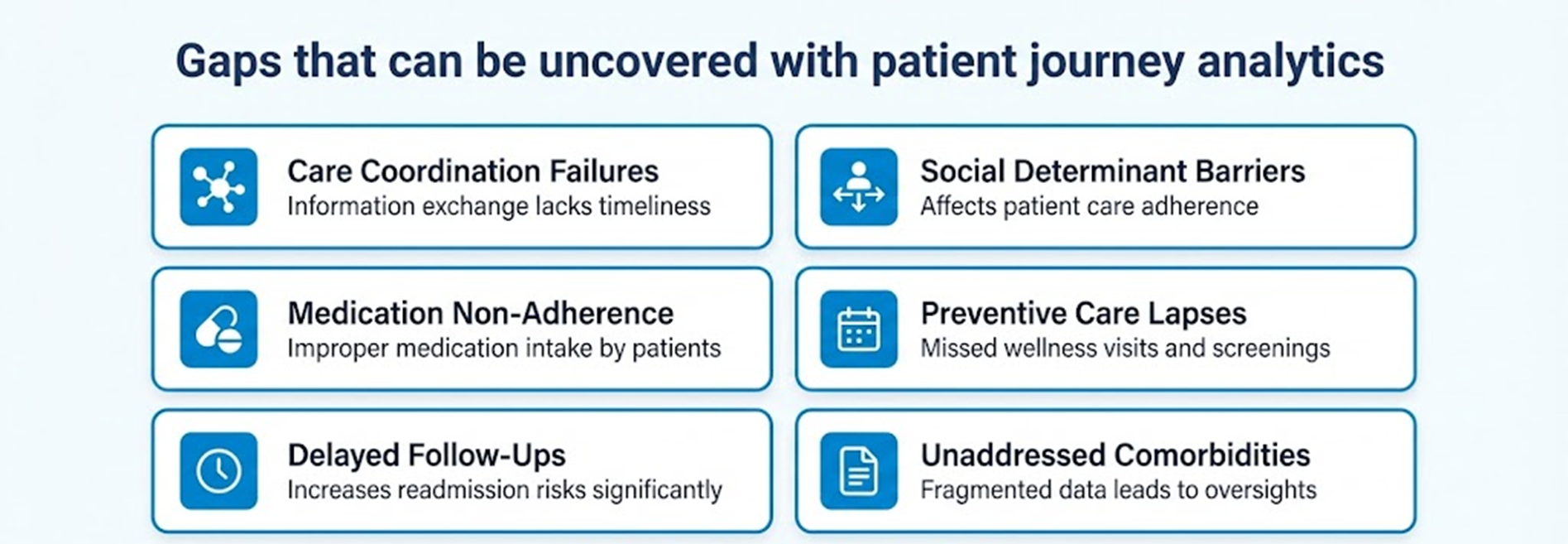
AI and advanced NLP models help healthcare providers detect patterns and barriers that are often invisible in siloed systems. Commonly identified care gaps include:
- Delayed Follow-Ups: Missed or postponed post-discharge appointments that increase readmission risks.
- Unaddressed Comorbidities: Overlooked conditions due to fragmented data across specialties or care settings.
- Medication Non-Adherence: Patients failing to refill or properly take prescribed medications.
- Preventive Care Lapses: Missed screenings, vaccinations, or wellness visits.
- Care Coordination Failures: Lack of timely information exchange between primary care providers and specialists.
- Social Determinant Barriers: Challenges like transportation, housing instability, or language differences affecting care adherence.
By linking structured (EHRs, claims) and unstructured data (clinical notes, patient messages), AI models can predict where interventions will have the greatest impact.
How is ROI measured in patient journey analytics?
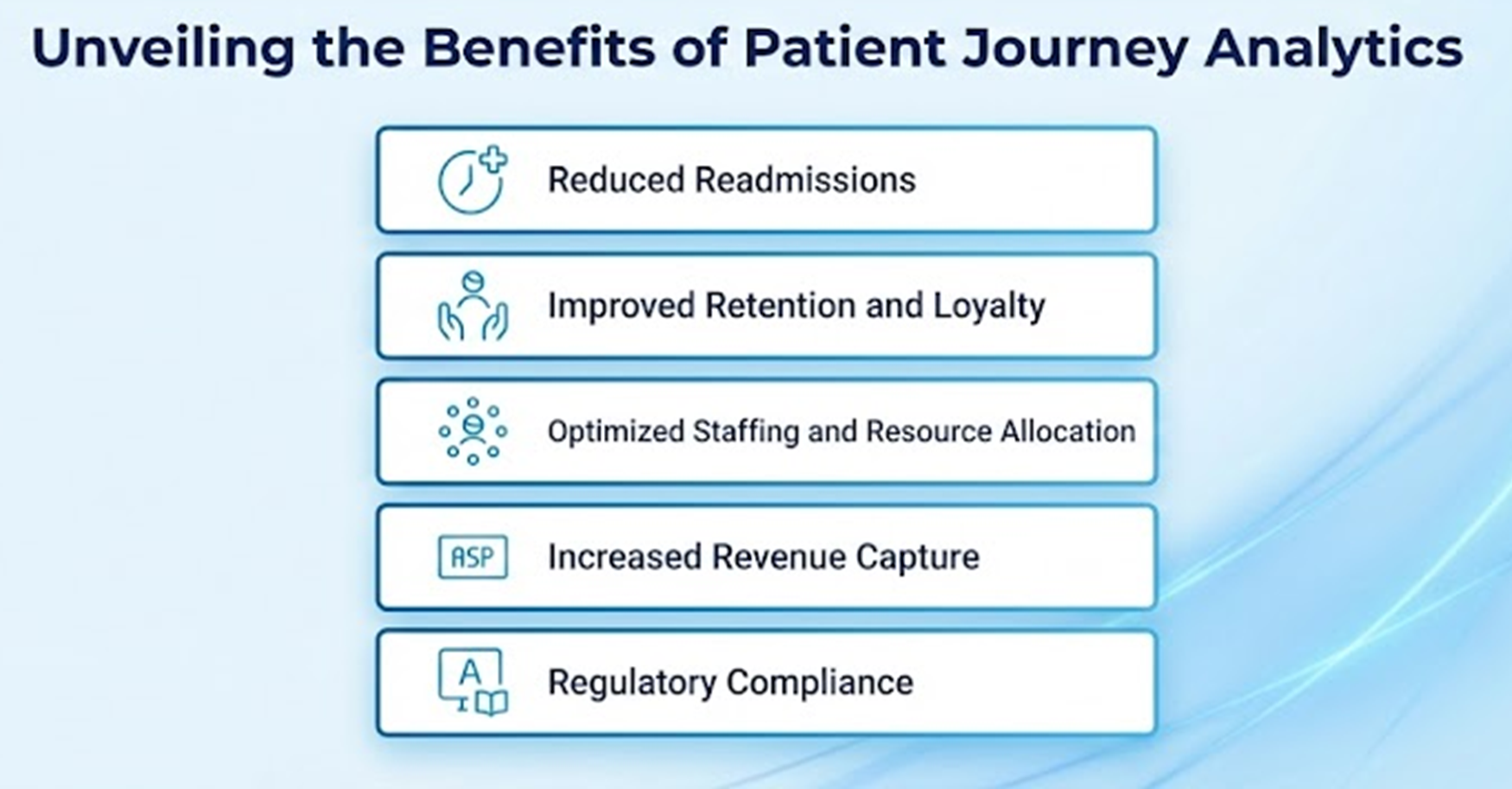
Return on investment (ROI) in journey analytics reflects both clinical and financial outcomes. Key metrics include:
- Reduced Readmissions: Predictive outreach can cut avoidable readmissions.
- Improved Retention and Loyalty: Enhanced patient experience encourages long-term engagement and trust.
- Optimized Staffing and Resource Allocation: Better visibility into patient flow reduces operational waste.
- Increased Revenue Capture: Identifying and coding missed diagnoses or comorbidities improves reimbursement accuracy.
- Regulatory Compliance: Automated quality reporting minimizes penalties and boosts performance scores.
Organizations typically realize measurable ROI within 12–24 months, especially when analytics are integrated into population health and value-based care programs.
How does John Snow Labs enable this transformation?
John Snow Labs’ new AI-driven Patient Cohort Builder and Healthcare NLP Pipelines revolutionize how healthcare organizations analyze and act on patient journey data. These solutions combine structured and unstructured data sources, turning raw information into actionable insights.
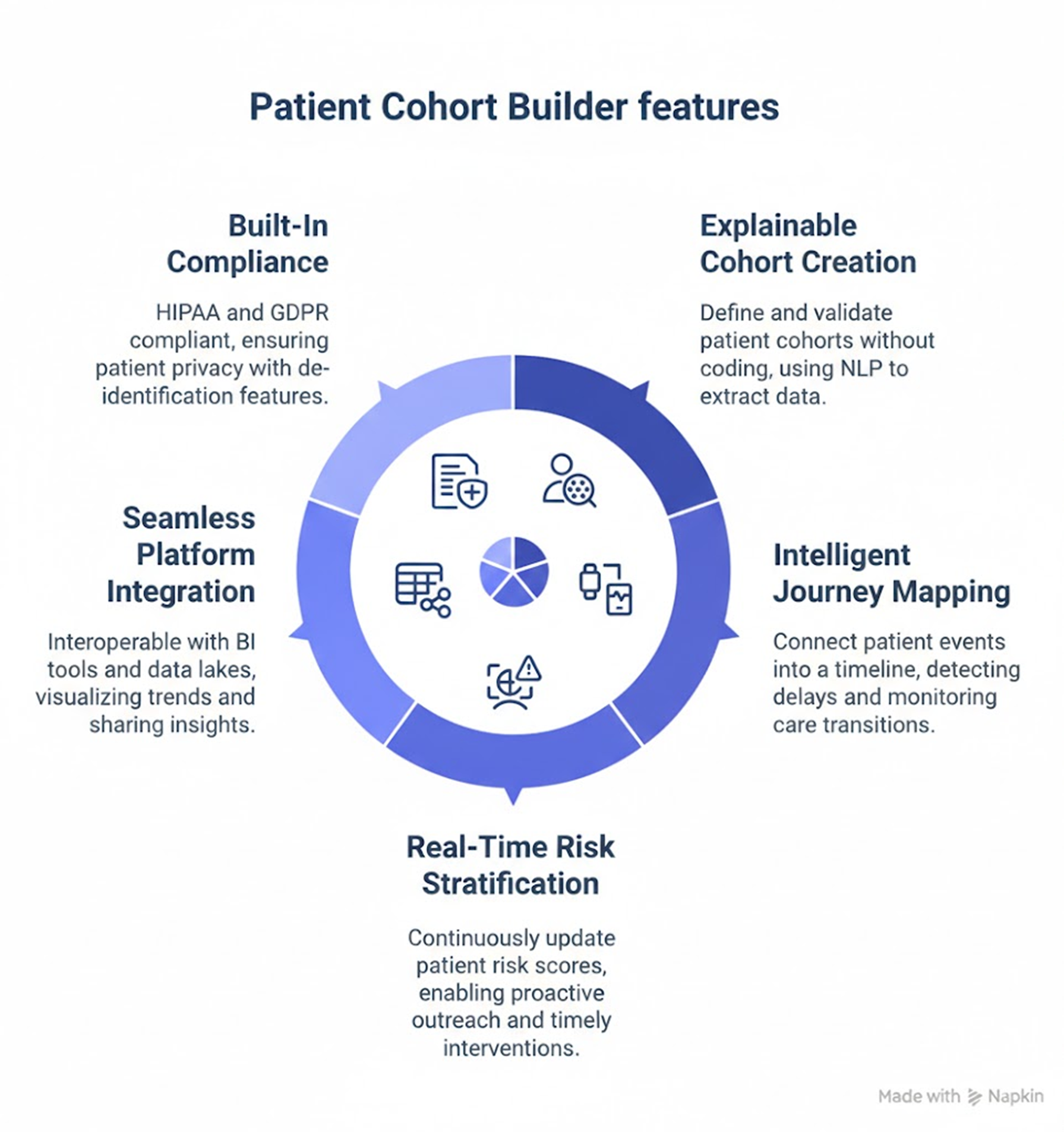
- Explainable Patient Cohort Creation
The Patient Cohort Builder enables clinicians and analysts to define, refine, and validate patient cohorts without coding. It automatically extracts data from clinical notes, pathology reports, and discharge summaries using state-of-the-art NLP models and LLMs, helping identify subpopulations with unmet needs or risk factors.
- Intelligent Journey Mapping
Through entity linking and temporal analysis, John Snow Labs’ pipelines connect every relevant patient event, diagnoses, treatments, labs, and follow-ups into a coherent timeline. This allows care teams to:
- Detect delays in care delivery.
- Identify missing referrals or incomplete therapy cycles.
- Monitor transitions of care to prevent drop-offs.
- Real-Time Risk Stratification
AI-powered journey analytics continuously update patient risk scores based on new information. These risk profiles enable proactive outreach, helping case managers intervene before issues escalate.
- Seamless Integration with Analytics Platforms
All models are interoperable with popular BI tools and data lakes, making it easy for health systems to visualize trends, track KPIs, and share insights across teams.
- Built-In Compliance and Transparency
Every data pipeline and model within the Patient Cohort Builder is HIPAA and GDPR compliant, featuring de-identification and auditability features to ensure patient privacy.
How AI-powered patient journey analytics improve outcomes
Clinical Benefits:
- Improved chronic disease management through timely interventions.
- Enhanced precision in identifying patient subgroups for personalized care.
- Data-driven triage that prioritizes high-risk populations.
Operational Benefits:
- Automation of reporting and quality metrics for CMS and HEDIS.
- Improved cross-departmental coordination and workload distribution.
- Streamlined referral processes and appointment scheduling.
Strategic Benefits:
- Clearer insights into population health trends.
- Better forecasting for resource utilization.
- Stronger basis for value-based care negotiations.
Challenges and future directions
While patient journey analytics offers immense potential, challenges remain:
- Data Fragmentation: Integrating diverse data sources requires advanced interoperability frameworks.
- Explainability: Clinicians must trust AI-driven recommendations through interpretable visualizations and traceable model logic.
- Scalability: Handling large, multi-institutional datasets demands robust cloud and federated learning infrastructures.
Future developments will include:
- Generative AI-based Journey Simulations for predictive what-if modeling.
- Integration with multimodal data (e.g., imaging, genomics, and wearable sensor data).
- Adaptive Cohort Discovery that evolves with patient behaviors and emerging health trends.
John Snow Labs’ focus on transparent, explainable, and regulatory-grade AI ensures these innovations remain practical, compliant, and clinically impactful.
FAQs
What is patient journey analytics?
It’s the use of AI and NLP to visualize and interpret a patient’s interactions across the care continuum, uncovering inefficiencies and opportunities for better care.
How quickly can ROI be realized?
Organizations typically see results within 12–24 months through improved operational efficiency, reduced readmissions, and higher patient satisfaction.
Can AI integrate patient satisfaction metrics?
Yes. NLP models analyze patient feedback and survey responses, correlating sentiment with care outcomes to improve satisfaction tracking.
How does John Snow Labs’ Patient Cohort Builder differ from others?
It offers explainable AI, healthcare-specific NLP, and privacy-preserving pipelines, allowing non-technical users to create, validate, and act on patient cohorts securely.
What data privacy measures are in place?
All solutions employ HIPAA-compliant de-identification, encryption, and role-based access controls, ensuring confidentiality and auditability.
Conclusion
Analyzing patient journey data transforms healthcare from fragmented to connected, enabling organizations to deliver proactive, coordinated, and value-based care. With John Snow Labs’ AI-powered Patient Cohort Builder and Healthcare NLP pipelines, providers can surface care gaps, automate analytics, and measure outcomes more accurately than ever before.
The ROI extends beyond numbers, it’s about improved lives, fewer missed opportunities, and a more equitable healthcare system built on data-driven intelligence.