























Join the Applied AI Summit | Free online conference | October 13-15, 2026
was successfully added to your cart.

Clinical Trial Matching

  • Assess trial feasibility across your entire patient population in minutes.
  • Automatic screening of structured patient data and clinical notes against trial eligibility criteria.
  • Identify potential candidates and review the evidence behind each match within your own environment.


Trusted by leading healthcare organizations

Why a hybrid approach

The facts that decide eligibility live in clinical notes

Stage, performance status, biomarkers, prior therapies, and treatment response are mostly documented in prose. Structured data misses eligible patients and includes ineligible ones, while manual review can’t cover the population.
01
Structured data
Filter with OMOP

Age, diagnoses, medications, labs and procedures run as SQL queries across every patient in seconds.

02
Clinical notes
Resolve from the notes

Criteria documented in prose are answered from the notes of the filtered population, each answer tied to its source.

03
Human in the loop
Your team decides

Coordinators review the evidence for each candidate and choose who to approach.

The John Snow Labs hybrid approach
All patients screened

Every patient is checked, not just the charts someone had time to open.

Full-chart evidence

Each criterion is evaluated across the full record, with the source for every answer.

Faster enrollment

Candidates surface in minutes instead of weeks of chart review.

Less manual effort

Reviewers focus on candidates and unresolved criteria only.

Auditable decisions

Every screening result traces back to its supporting evidence.

Reusable cohorts

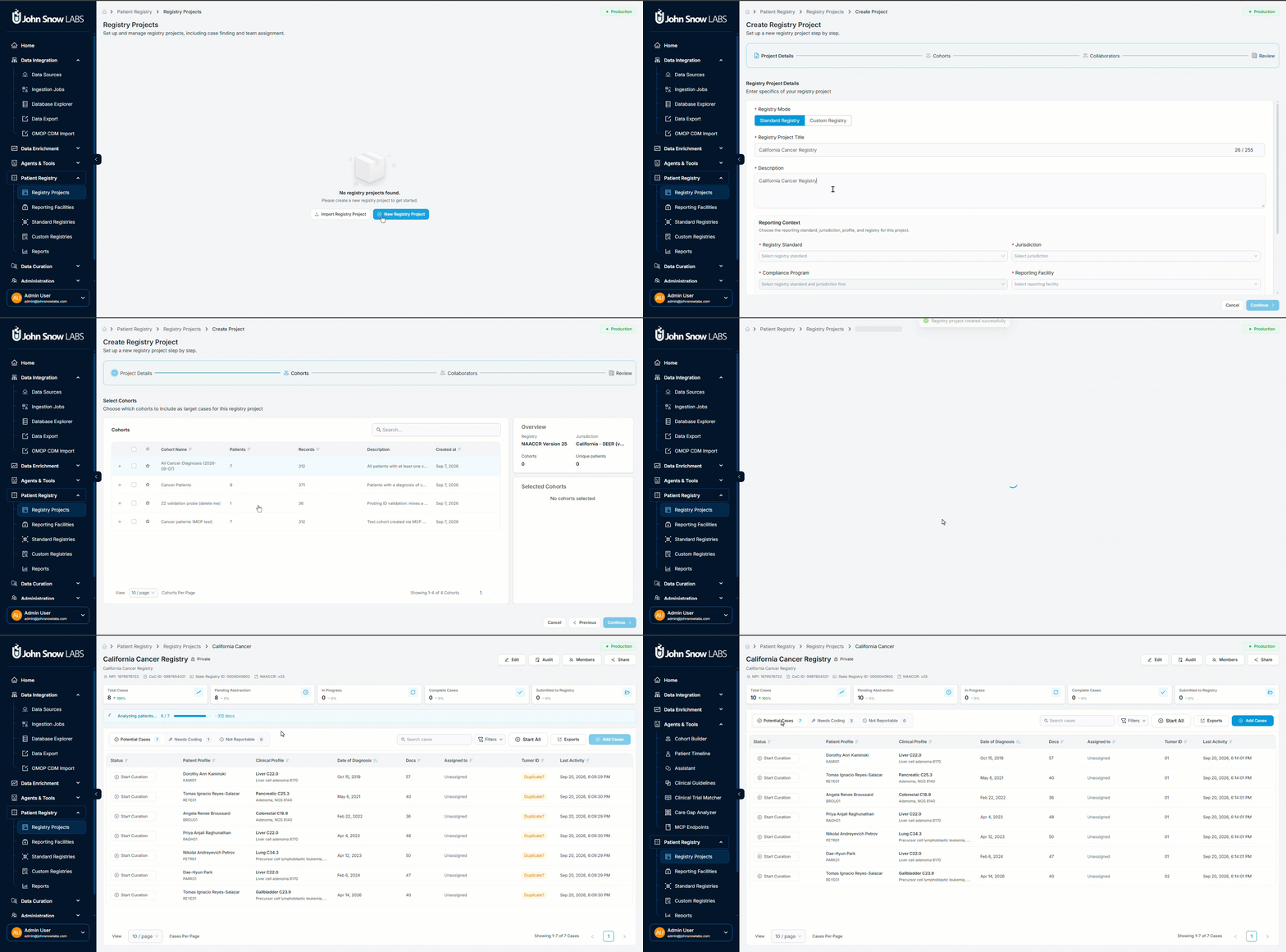
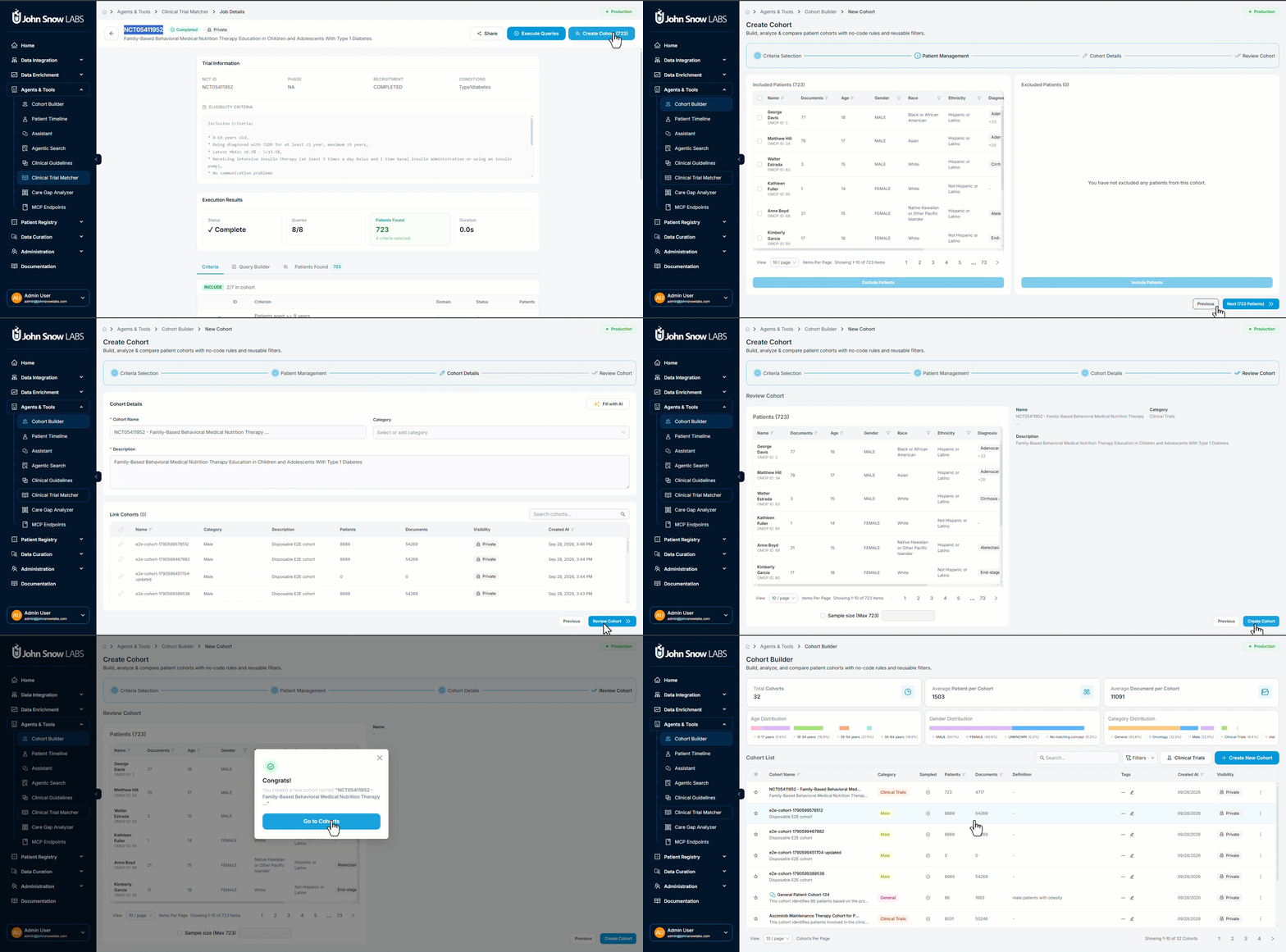
Save candidates as cohorts for export, curation or registries.

How it works

From protocol text to a cohort you can defend

Three steps: parse the protocol into criteria you review, run each criterion as a SQL query on OMOP
or a prompt over patient notes, then save the matches as a cohort you can export or curate further.
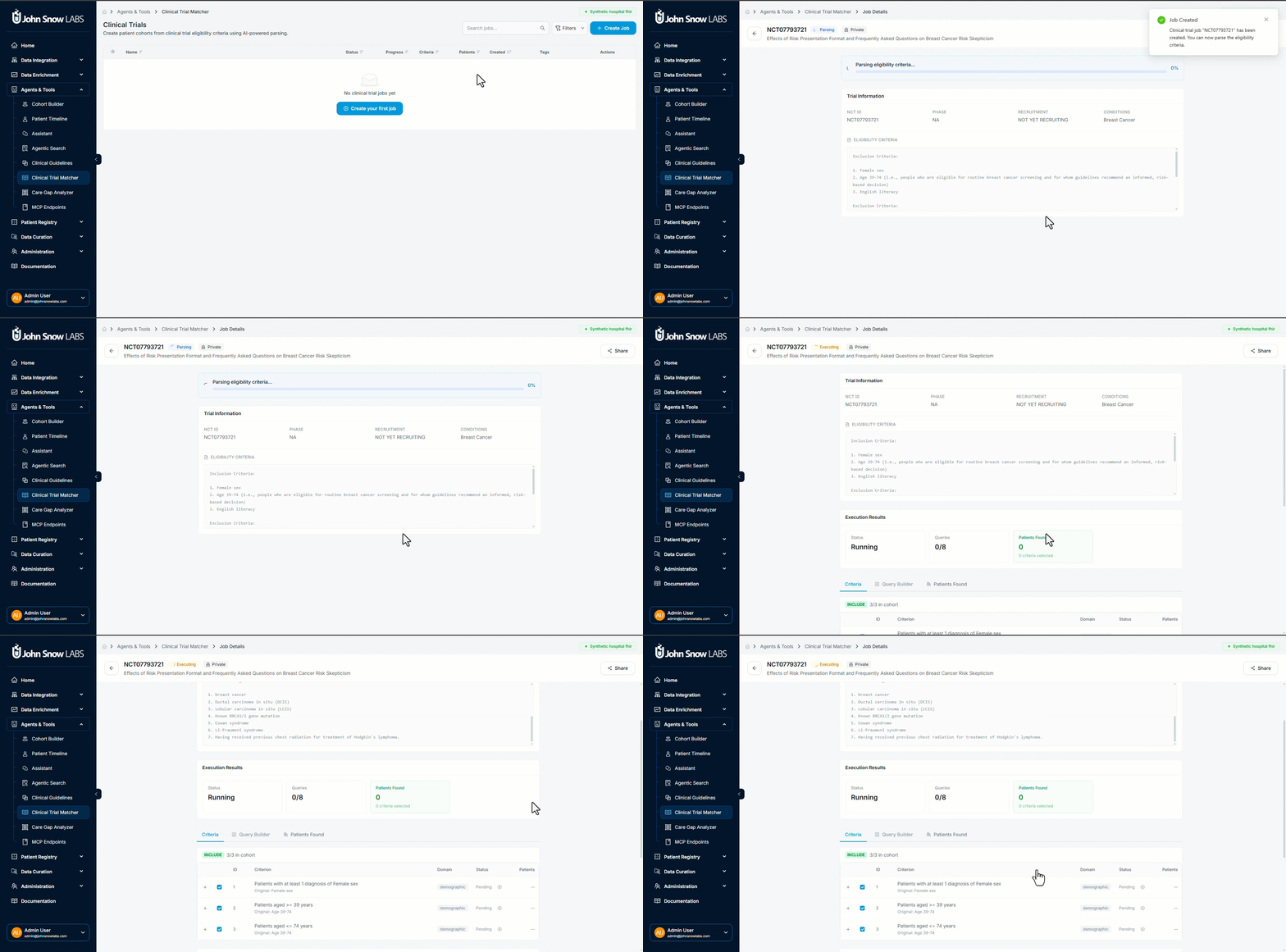
Find or paste a trial
Review parsed criteria
Match against OMOP
Resolve note criteria
Review & save cohort

Choose a trial or add your protocol

Import eligibility criteria from ClinicalTrials.gov or paste protocol text.

Read the Clinical Trial Matcher docs →

Review the criteria and screen your records

Evaluate available structured data and relevant clinical notes.

Read the Clinical Trial Matcher docs →

Review candidates and save a cohort

Inspect supporting evidence and identify remaining review needs.

From matches to a saved cohort →

Coverage and review

Every criterion evaluated. Every gap flagged.

Every criterion is labelled with how it is answered and what the record showed, so you can see
what a count was tested against before you trust it. Nothing is silently dropped.
How each criterion is answered
Mapped to OMOP

Diagnoses, medications, procedures, labs and demographics run as SQL against your OMOP records. Criteria are checked across the whole population in seconds.

Learn more →
Direct access to curated data

Standard SQL against OMOP CDM tables: de-identified, conflict-resolved, scored.

Learn more →
Computed measures

Thresholds on derived values such as eGFR or BMI are evaluated on values computed from the patient record, within the time window the protocol sets.

Learn more →
Manual screening

Willingness, consent, literacy or transport cannot be answered from records. These criteria are named on the candidate list for the study team to confirm.

Learn more →
What each result means
Evaluated

The available data supports an assessment. The result is shown with the codes, values or note passages behind it.

Missing information

The record does not hold enough evidence to assess the criterion. The patient stays on the list, flagged, rather than being excluded.

Manual review required

The criterion can only be assessed by the study team, such as consent, willingness or ability to attend visits.

The study team confirms final eligibility. The matcher delivers a screened candidate list with evidence; the decision to approach a patient stays with the study team and treating clinician.

Watch clinical trial matching in action

Matching oncology
patients to trial criteria with NLP and LLMs
Research-ready
OMOP data across a health system
From raw data to agentic workflows: a deep dive into Patient Journey Intelligence
Deployment

What it takes to run in your organization

The questions to settle before an evaluation: where it runs, what data it needs
and what the first screen involves.
01
Where the software and models run
Inside your environment: on-premises, AWS, Azure, Databricks, Snowflake or air-gapped. The models run there too, so no patient data or prompts leave your perimeter. The only outbound request fetches public trial metadata from ClinicalTrials.gov; in air-gapped setups, protocol text is pasted instead.
02
What patient data must be available
Structured EHR data (diagnoses, medications, procedures, labs, demographics) answers most criteria. Clinical notes and reports are needed for criteria documented only in narrative text, such as staging or biomarker results, social determinants, family history, etc.
03
Whether you need OMOP data already
Clinical trial matching runs against the OMOP Gold layer. If you already have OMOP CDM v5.4 data, the matcher queries it directly. If not, Patient Journey Intelligence builds it by ingesting your multimodal data: unstructured clinical notes, PDFs, DICOM, JSON, CSVs, EHR data, FHIR R4 feeds, etc. and harmonizing it into OMOP.
04
What setup and support are included
Scope of installation, data integration and onboarding support is pending commercial confirmation.
Security and privacy

Data handling meets the HIPAA Privacy and Security Rules and GDPR Article 25. Field-level RBAC scopes what each role sees.

Data governance →
Inspectable logic

Original eligibility text, parsed criteria, per-criterion counts and generated SQL are all open to review.

AI governance →
Standards

OMOP CDM v5.4 and FHIR R4, with standard clinical terminologies.

Integration details →
Powered by

The same products your teams already license

One platform: start with trial matching, add care gap analysis, registries or OMOP harmonization on the same foundation.

Run a feasibility screen on your protocol

We screen your own patients inside your environment. Your team reviews the candidate list against the linked evidence, criterion by criterion.

Frequently asked questions

No. Search recruiting and not-yet-recruiting US trials by disease area, intervention or sponsor, or enter an NCT ID if you have one.

Yes. Paste the eligibility criteria text directly when creating the job. That covers local protocols, investigator-initiated studies, and amendments not yet published to the registry. Include both the inclusion and exclusion sections so the parser preserves the protocol's intended structure.

Criteria that live in narrative text, such as performance status, biomarker results or prior lines of therapy, are resolved by prompting over the notes of patients who already passed the OMOP filtering criteria. Each answer links back to the note it came from, and a patient whose notes do not cover the criterion is reported as unknown rather than excluded.

They are never dropped. Criteria such as willingness to comply or access to transport are labelled for manual screening and listed alongside each candidate. Where your data holds nothing for a criterion, the count says so and shows how many candidates had data for it.

No. It produces a screened candidate list with the evidence behind each criterion attached. Final eligibility requires protocol review and site-specific clinical validation, and the decision to approach a patient rests with the study team and the treating clinician.

Cached reuse is right for a repeated feasibility question against unchanged data. Use Run Fresh when patient data has been reloaded, when the protocol has been amended, or when the matching logic has changed. The job detail page shows a banner whenever results were reused.

No. Matching runs entirely inside your deployment, including air-gapped environments. Trial metadata is retrieved from ClinicalTrials.gov, a public registry containing no patient information. In an air-gapped deployment, protocol text is pasted in rather than fetched.