

 Demos
Demos














Medical code resolution maps an entity extracted from clinical text to a concept in a standard terminology. For example, “type 2 diabetes mellitus without complications” maps to E11.9 in ICD-10-CM. Generative AI Lab runs this mapping inside the annotation workflow for six terminologies: ICD-10, SNOMED CT, LOINC, RxNorm, CPT and MeSH. Annotators review each extracted entity, its label and its proposed code in one interface. The export includes all three.
Why Does the Gap Between Extracted Entities and Standard Medical Codes Matter?
Healthcare runs on codes: ICD-10 for diagnoses, LOINC for lab observations, CPT for procedures, SNOMED CT for clinical concepts, RxNorm for medications, MeSH for biomedical literature. EHRs, billing systems, research databases and regulatory submissions exchange clinical data through these codes.
When NLP extracts entities from clinical text, what it captures are surface forms, the words as written in the note: “chest pain,” “troponin I,” “left knee arthroscopy.” Coded data exchange needs each of these strings mapped to a concept in a standard terminology. Closing that gap has traditionally meant one of two workarounds: a post-processing resolution step disconnected from the human review workflow, or manual coding by annotators who look up codes themselves, which introduces inconsistency and slows throughput. Neither keeps the coded result connected to the annotation decision that produced it, and neither enables a human-in-the-loop workflow where a reviewer verifies the entity label and the resolved code in one pass.
Example: an annotator reviewing a synthetic oncology progress note sees the entity “stage IIIA non-small cell lung cancer” and needs an ICD-10-CM code; “carboplatin AUC 5” needs an RxNorm code; “ECOG performance status 1” needs a mapped SNOMED CT concept. Under the old workaround, that’s three separate lookups outside the annotation tool, each one a place for the coded result to drift from the entity it describes.
How Does Generative AI Lab Integrate Medical Terminologies into Annotation Projects?
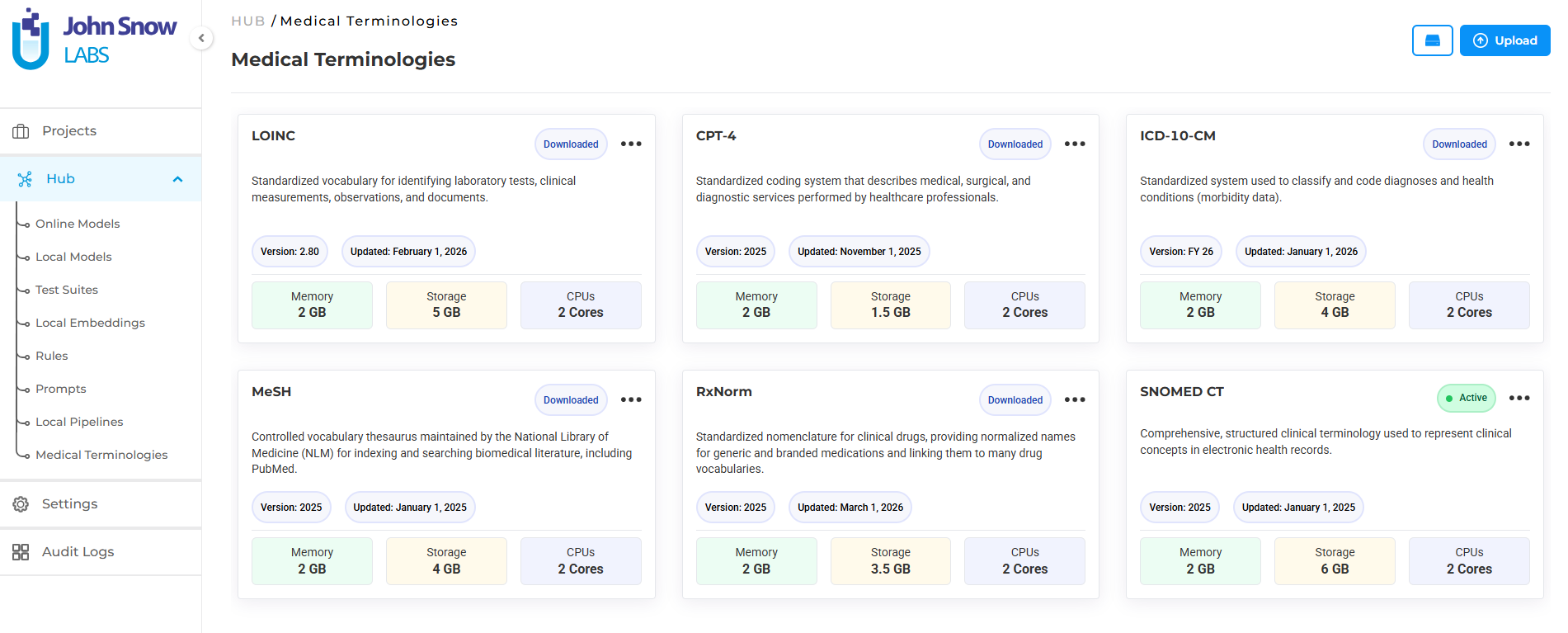
Medical Terminologies are available as native resources in the Generative AI Lab Hub, alongside NLP models and other clinical resources.
Teams can browse available terminologies, review their coverage, and download the resources required for their annotation projects. Once downloaded, terminologies become shared assets that can be used across multiple projects without redundant setup.
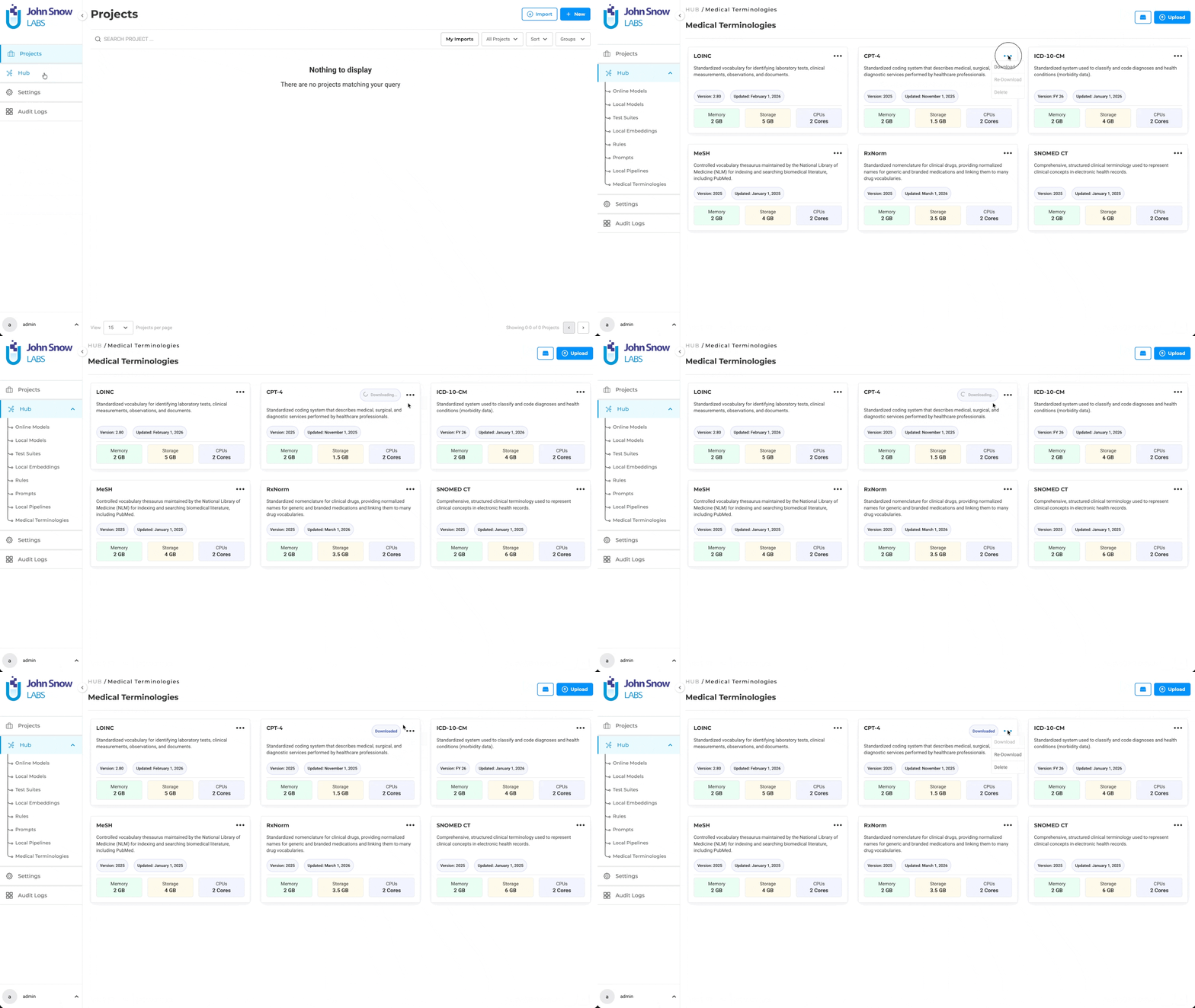
Terminology access follows the same licensing model as Healthcare NLP pipelines. Downloading requires a valid license with the appropriate healthcare scope.
Generative AI Lab makes downloaded vocabularies available within the application. No additional deployment, external artifacts, or coding is required to start using them in annotation projects.
How Are Medical Terminologies Linked to Annotation Labels?
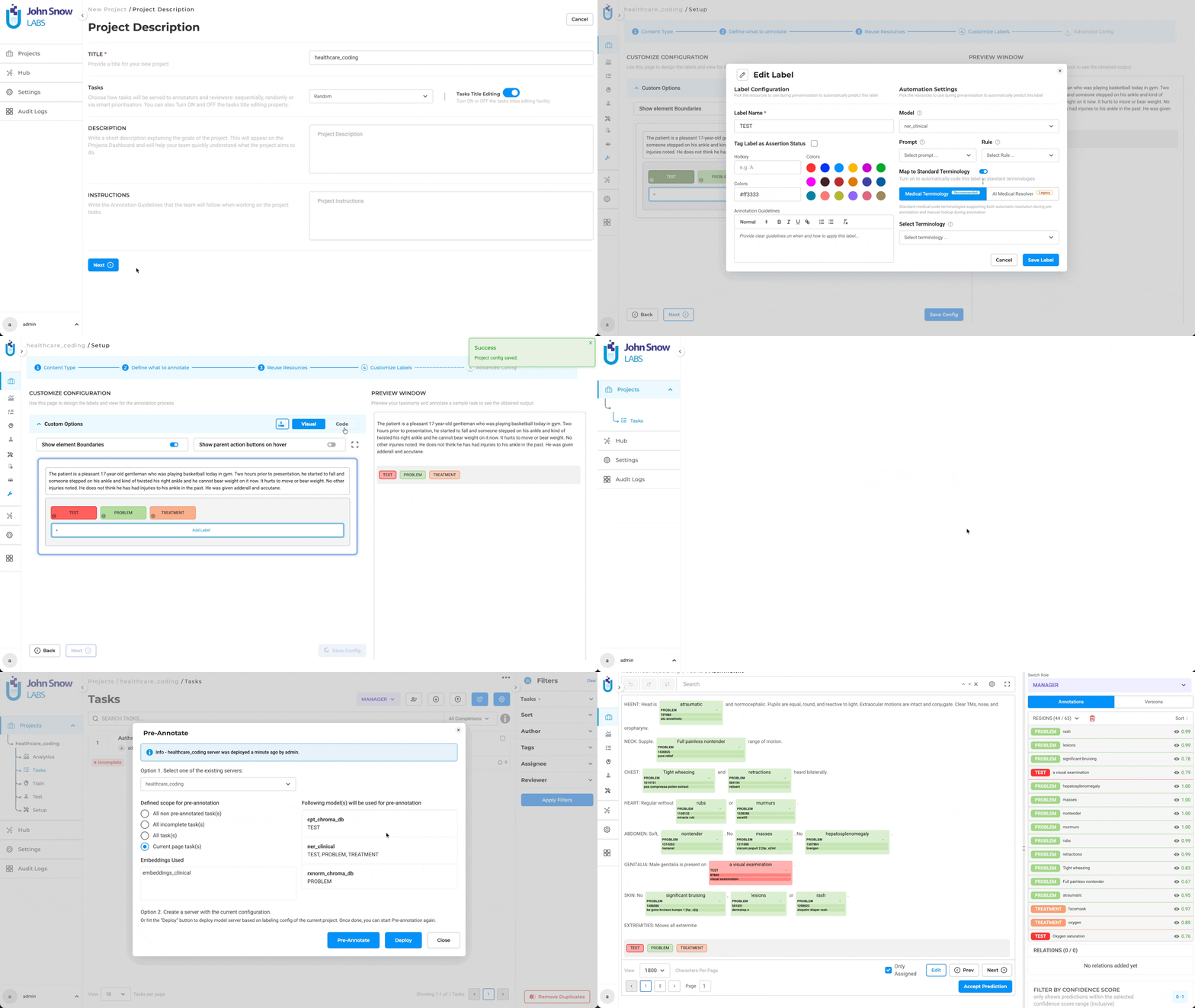
The integration between medical terminologies and annotation projects is configured through the Label Configuration interface.
When creating or editing a project, teams can enable Medical Terminologies in the Customize Label interface and associate specific terminologies with annotation labels.
For example, a clinical annotation project might associate ICD-10 with diagnosis labels, LOINC with laboratory observation labels, RxNorm with medication labels, and CPT with procedure labels.
These associations determine which terminology is used to resolve entities extracted under each label.
One configuration restriction is that Medical Terminologies cannot be combined with legacy AI resolver models in the same configuration. Generative AI Lab validates the configuration and identifies conflicts when both are selected.
How Does Automatic Medical Code Resolution Work During Pre-Annotation?
Generative AI Lab supports automatic medical code resolution as part of the pre-annotation workflow.
When a pre-annotation pipeline extracts an entity associated with a label linked to a medical terminology, the corresponding terminology is used to identify a proposed standard code.
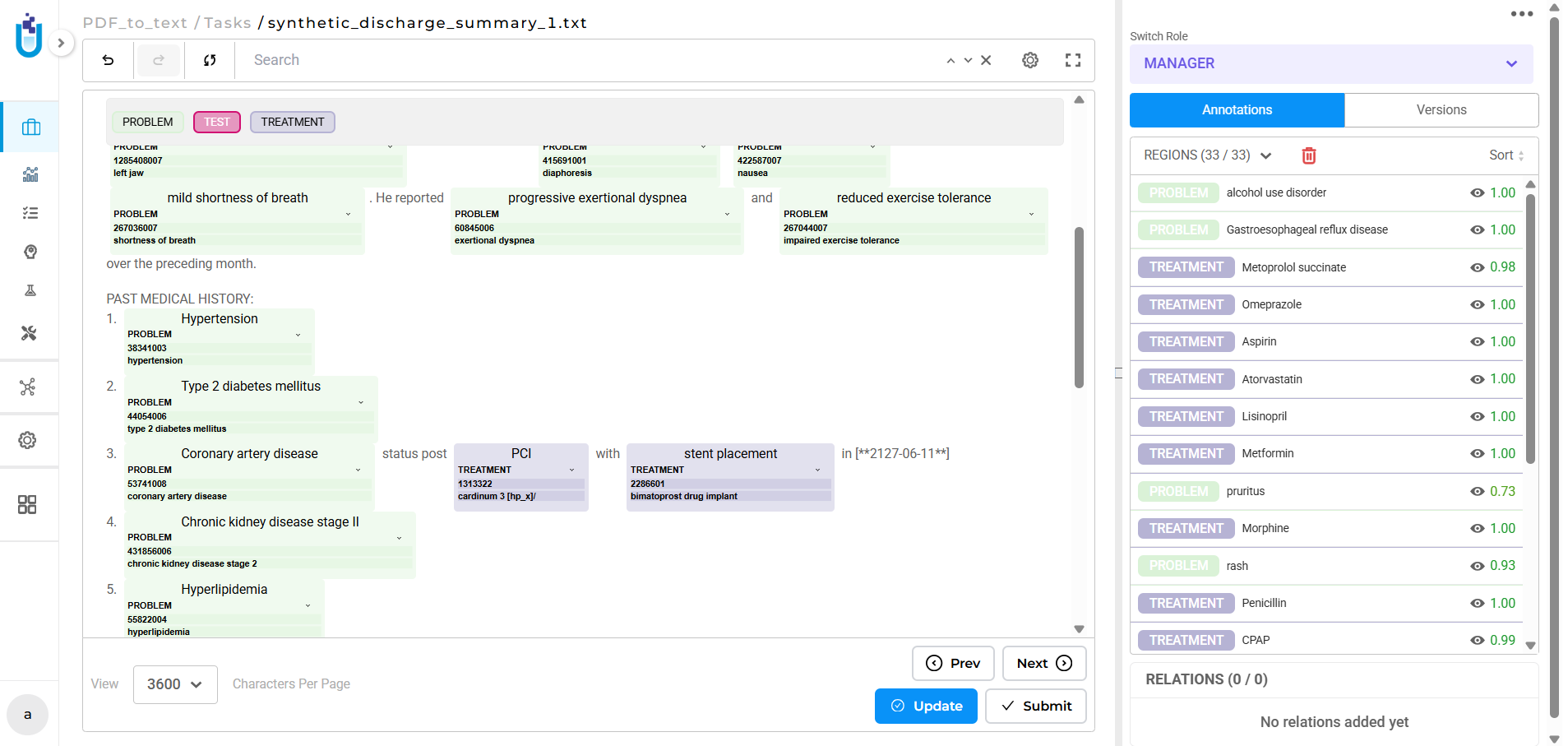
For example, consider a clinical note documenting type 2 diabetes mellitus without complications.
During pre-annotation, the NLP pipeline extracts the diagnosis and associates it with the configured Diagnosis label. The linked ICD-10-CM terminology can then resolve the diagnosis to code E11.9.
The annotator sees E11.9 next to the Diagnosis label on the extracted entity. This allows reviewers to verify or correct both the extracted entity and its terminology mapping without performing a separate lookup.
The entity, its annotation label, and the associated code remain connected throughout the annotation workflow and are included in the exported annotation data.
How Can Annotators Manually Resolve Medical Codes During Human Review?
Automatic terminology resolution does not eliminate the need for human judgment.
Clinical terminology mapping can involve ambiguous expressions, multiple potentially valid codes, or incomplete information in the source document. In these situations, annotators need to examine the clinical context before selecting the appropriate terminology concept.
Generative AI Lab provides manual terminology lookup within the annotation interface.
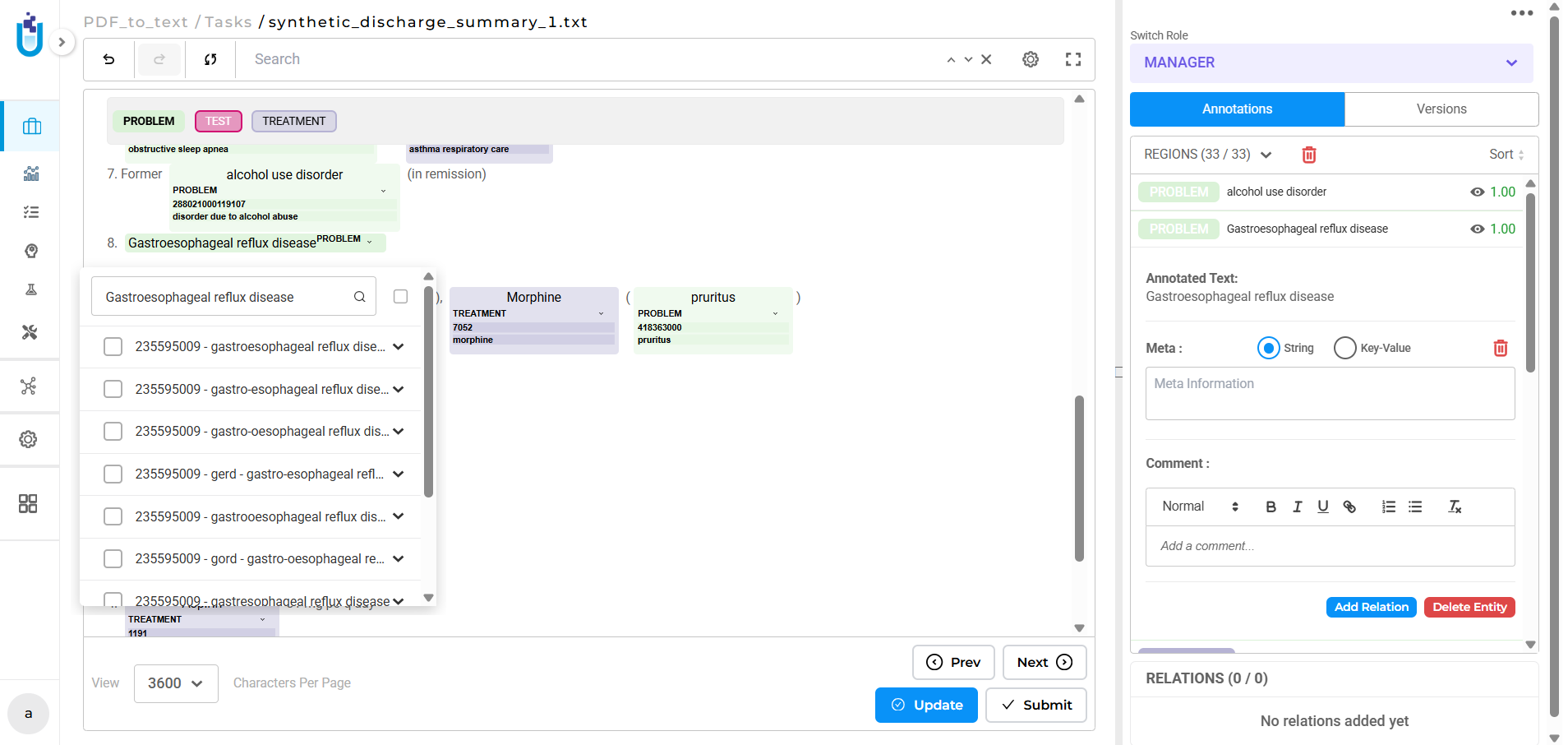
When an automatically suggested code requires correction, or when no suitable code has been assigned, annotators can search the terminology associated with the relevant label and select the appropriate concept without leaving the application.
Keeping manual lookup within the annotation interface allows reviewers to examine the source text, annotation label, and terminology candidates together.
The selected code remains attached to the annotation, preserving the relationship between the original clinical expression and its standardized representation.
This integrated human-in-the-loop process helps maintain consistent annotation decisions while retaining the clinical judgment required for complex terminology mapping.
How Does Generative AI Lab Support Multiple Medical Terminologies Across Projects?
Clinical annotation projects often require more than one medical terminology.
For example, a project processing cardiology records might require ICD-10 for diagnoses, LOINC for laboratory observations, and CPT for procedures.
Generative AI Lab supports multiple linked terminologies within the same project. Users configure the terminology associations at the label level, while the platform manages the underlying resources.
One terminology server hosts all the terminologies linked to a project.
If another project requires the same terminologies or a subset of those already available, the platform can reuse the existing server.
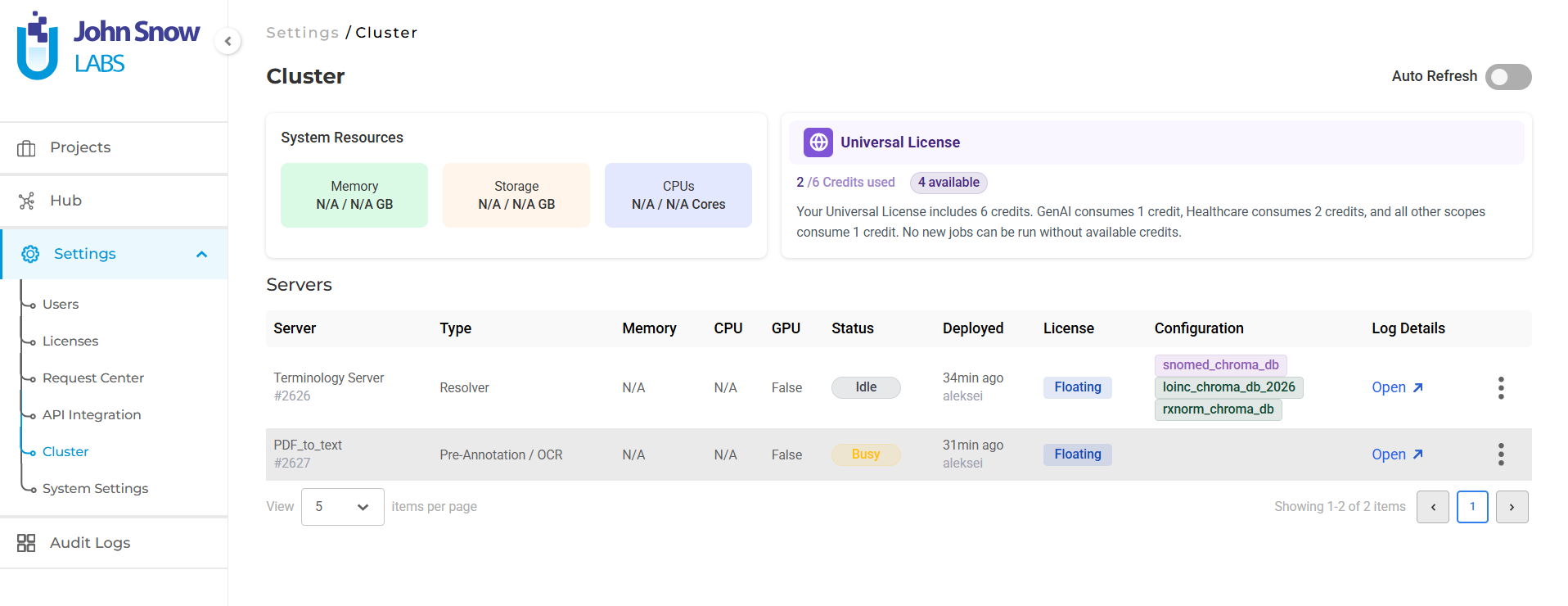
The Cluster Management page provides administrators with information about active terminology servers, including deployed terminologies, server uptime, resource usage, and associated projects.
These infrastructure operations are managed by the platform and do not require users to perform additional manual deployment or write integration code to use downloaded vocabularies.
How Does Integrated Terminology Mapping Improve Clinical NLP Workflows?
Integrating medical code resolution into the annotation environment removes the need to manage entity extraction and terminology mapping as entirely separate processes.
For teams annotating clinical documentation, discharge summaries, clinical trial records, prior authorization notes, or structured intake forms, the terminology lookup takes place within the same environment where the original annotation is created and reviewed.
Richer training data
Teams developing clinical NLP models can create annotated datasets containing both the original clinical expressions and their standardized terminology codes.
These datasets can support downstream tasks such as diagnosis classification, medication normalization, laboratory observation mapping, and procedure coding.
Integrated human review
Annotators can examine extracted entities and proposed codes in the context of the original clinical document.
For example, a reviewer confirming a diagnosis annotation can simultaneously verify its ICD-10-CM code, reducing the need to switch between annotation and terminology lookup tools.
Consistent terminology mapping
Linking terminologies to annotation labels allows projects to use consistent coding resources throughout their annotation workflows.
Shared terminology assets also make it easier for multiple projects to work with the same standardized vocabularies.
Preparation for downstream interoperability
Exported annotations include the source text, the label and the code, so a downstream system can load coded data without a second mapping step. Receiving systems may still need to confirm that each code matches the terminology edition they use.
Frequently asked questions
What are Medical Terminologies in Generative AI Lab?
A native capability that resolves standard medical codes, including ICD-10, SNOMED CT, LOINC, RxNorm, CPT, and MeSH, directly inside the annotation workflow, connecting each extracted entity to a standard code without a separate lookup tool.
Which standard medical terminologies are supported out-of-the-box in Generative AI Lab?
The Hub includes ICD-10 for diagnoses, LOINC for lab observations, CPT for procedures, SNOMED CT for clinical concepts, RxNorm for medications, and MeSH for biomedical literature, downloadable as needed.
How does automatic code resolution work during pre-annotation in Generative AI Lab?
When the pre-annotation pipeline extracts an entity matching a label linked to a terminology, it resolves the corresponding code in the same pass. The reviewer sees the entity, the label, and a proposed code together instead of running a separate lookup.
What happens when automatic resolution does not find a confident match?
The annotator queries the manual lookup inside the annotation interface during human review and selects the correct code, without leaving the platform or switching tools.
Can a single Generative AI Lab project use more than one terminology at a time?
Yes. All terminologies linked to a project run on one terminology server. A project that needs the same terminologies, or a subset of them, reuses that server.
Why Does Keeping the Entity and Code Together Matter for Downstream Systems?
Clinical NLP models extract medical information as it appears in source documents. However, many downstream healthcare applications require standardized terminology codes rather than free-text expressions alone.
Keeping extracted entities and their resolved codes together preserves the relationship between the original clinical language and its standardized representation.
This enables the creation of richer annotated training datasets and makes it easier to prepare clinical information for downstream applications such as diagnosis classification, medication normalization, clinical research, and interoperability workflows.
How does John Snow Labs support terminology resolution outside annotation?
The Terminology Server provides SNOMED CT, ICD-10, LOINC, and RxNorm mapping as a standalone service for pipelines outside Generative AI Lab. Teams evaluating the full review workflow can also watch the on-demand webinar HIPAA-Compliant Human-in-the-Loop Workflows in the Generative AI Lab.
Learn more
Full technical details on Medical Terminologies, Hub configuration, and deployment options are in the Generative AI Lab documentation.